The quick decision
Choose MDF when the part needs a smooth painted surface, routed profile, or uniform flat substrate in a dry, protected location. Choose plywood when the part needs lower weight, stronger edge and screw performance, visible wood grain, or better tolerance of ordinary moisture risk. Many good cabinets use both: plywood for the box and MDF for painted doors or applied panels.
Do not choose at the project level until you examine each part. A cabinet side carries hardware and shelves; a door needs a flawless painted face; a back braces the case; a decorative end may only need to stay flat. Assign material by job.
How construction changes performance
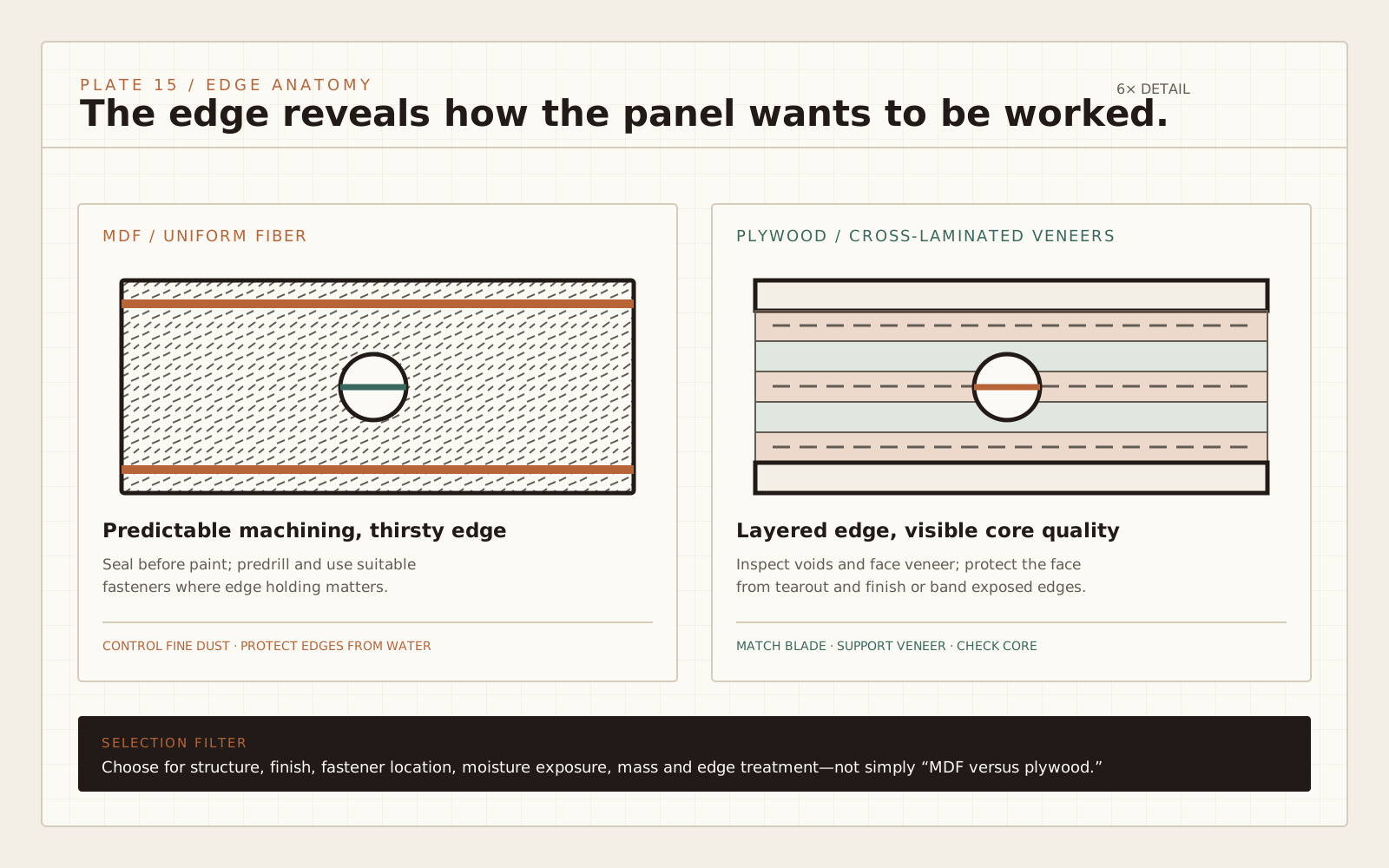
MDF is made from refined wood fibers and resin pressed into a dense, uniform panel. It has no face-grain direction, internal plies, or natural figure. That consistency makes it predictable under a router and gives profiles a smooth, repeatable surface.
Plywood is built from veneer layers with alternating grain directions. Its faces can provide real wood grain, while the cross-laminated construction gives the panel useful stiffness and resistance to splitting. Quality varies with veneer, core species, ply count, voids, and grade.
The difference explains most tradeoffs. MDF's uniform core machines cleanly but is heavy and vulnerable at wet or damaged edges. Plywood's layered core is lighter and better for many fasteners, but cut edges can splinter and exposed plies need a design decision.
Painting, staining, and exposed edges
MDF is usually the easier paint substrate. Its broad faces have no grain to telegraph, and routed details remain consistent. The edges are more porous than the faces, so they need careful sealing and sanding to avoid a fuzzy or dull finish. Use a coating system compatible with the product and keep moisture away from unfinished edges.
Plywood is the natural choice when a wood-grain face will be stained or clear-coated. Face grade and veneer thickness matter: aggressive sanding can cut through a thin veneer. Test stain and finish on an offcut because face species, patches, glue, and sanding sequence affect color.
An exposed plywood edge can be celebrated, covered with iron-on veneer, or protected with solid wood. MDF edges can be filled and painted, but they are not attractive under a clear finish. Choose edge treatment before sizing parts because solid edging changes dimensions and joinery.
Fasteners, joinery, and load
Plywood generally holds screws better, particularly where hardware must survive repeated use. Core quality still matters, and edge screws need appropriate pilots and placement. MDF can hold screws in its face when the pilot and fastener are suitable, but overdriving can strip the fibers and repeated removal weakens the hole.
Use confirmat-style or manufacturer-recommended fasteners where an MDF assembly requires them. Keep screws away from vulnerable edges and drill accurate pilots. Hinges and slides deserve test holes in an offcut before the finished part is drilled.
For shelves and other spanning parts, plywood is generally the safer starting point because MDF is heavy and more prone to sag. Yet no sheet material is exempt from span design. Add a front edge, divider, or other support where needed. A short MDF shelf in a fully supported painted built-in can be sensible; a long unsupported shelf with concentrated load is a different problem.
Dados and rabbets work in both materials when sized correctly. MDF routes without veneer tearout but produces fine dust. Plywood needs a sharp cutter and a joint sized from actual panel thickness. Avoid weakening either panel with an unnecessarily deep groove.
Moisture, dust, and handling
Unprotected MDF absorbs water readily and can swell, especially at edges and fastener holes. Moisture-resistant MDF products exist, but their label and limits must be checked; they are not automatically exterior panels. Plywood also suffers from prolonged moisture, although suitable grades and bond classifications offer more options for damp risk.
MDF is dense and heavy. Plan sheet handling, support both sides of a cut, and avoid lifting large panels alone. Plywood can be lighter, but a high-ply hardwood panel may still be substantial. Store both flat and dry.
Cutting MDF creates abundant fine dust. Use extraction at the tool, a properly fitted respirator selected for the hazard, and good cleanup practices. Plywood dust and adhesives also require control. Consult product safety information instead of assuming a wood-based panel is harmless.
Use a hybrid material plan
A useful cabinet strategy is plywood sides, bottoms, shelves, and stretchers paired with MDF painted doors and applied end panels. A shop jig might use stable MDF for a template surface and plywood for the base or clamping structure. A painted bookcase can use MDF where the surface and profile matter, then add solid edging and intermediate support.
Keep unlike materials free to behave as their construction requires. Do not force a large MDF panel to imitate a solid-wood movement joint, and do not trap a decorative solid-wood strip across grain without allowing movement. The hybrid succeeds when each connection is designed, not merely glued together.
Build a part schedule with columns for finish, load, span, hardware, moisture exposure, edge treatment, and weight. Assign MDF or plywood only after those columns are filled. Then buy a product grade and thickness that supports the assignment.
Before committing, test the actual materials: rout the profile, drive the intended screw, apply primer or stain, and inspect the edge. A small offcut test reveals more than a generic claim that one panel is "better."
| Decision factor | MDF | Plywood |
|---|---|---|
| Painted flat face | Excellent uniform substrate | Good with suitable grade and prep |
| Routed painted profile | Consistent and grain-free | Veneer and plies can show |
| Clear or stained wood look | Not a natural choice | Choose a suitable face veneer |
| Screw and hardware use | Needs careful pilots and suitable fasteners | Generally stronger; core quality matters |
| Long shelf | Heavy and more sag-prone | Usually the better starting point; still support it |
| Moisture risk | Edges are vulnerable | More product options; verify rating |
| Handling | Dense and heavy | Often lighter, depending on core |
Primary references
Use the current product label, technical data sheet, safety data sheet and machine manual for the exact item in your shop. These primary references frame the general guidance on this page.
Frequently asked
Is MDF or plywood better for cabinets?
Plywood is often preferred for boxes and load-bearing parts, while MDF excels for smooth painted doors and decorative panels. A hybrid cabinet can use both effectively.
Which material paints better?
MDF provides a very uniform face for paint, but its edges need sealing. Plywood can paint well when the face grade and preparation are suitable.
Does MDF hold screws?
It can hold suitable screws in properly drilled holes, but it is easier to strip and weaker near edges than good plywood. Test the exact fastener and avoid overdriving.
Can MDF be used for shelves?
Yes for short, well-supported, dry applications. Long or heavily loaded shelves need careful span design and often favor plywood or added stiffening.
Can MDF get wet?
Ordinary MDF is vulnerable to swelling when wet, especially at edges. Moisture-resistant products have different capabilities, so follow the product documentation.