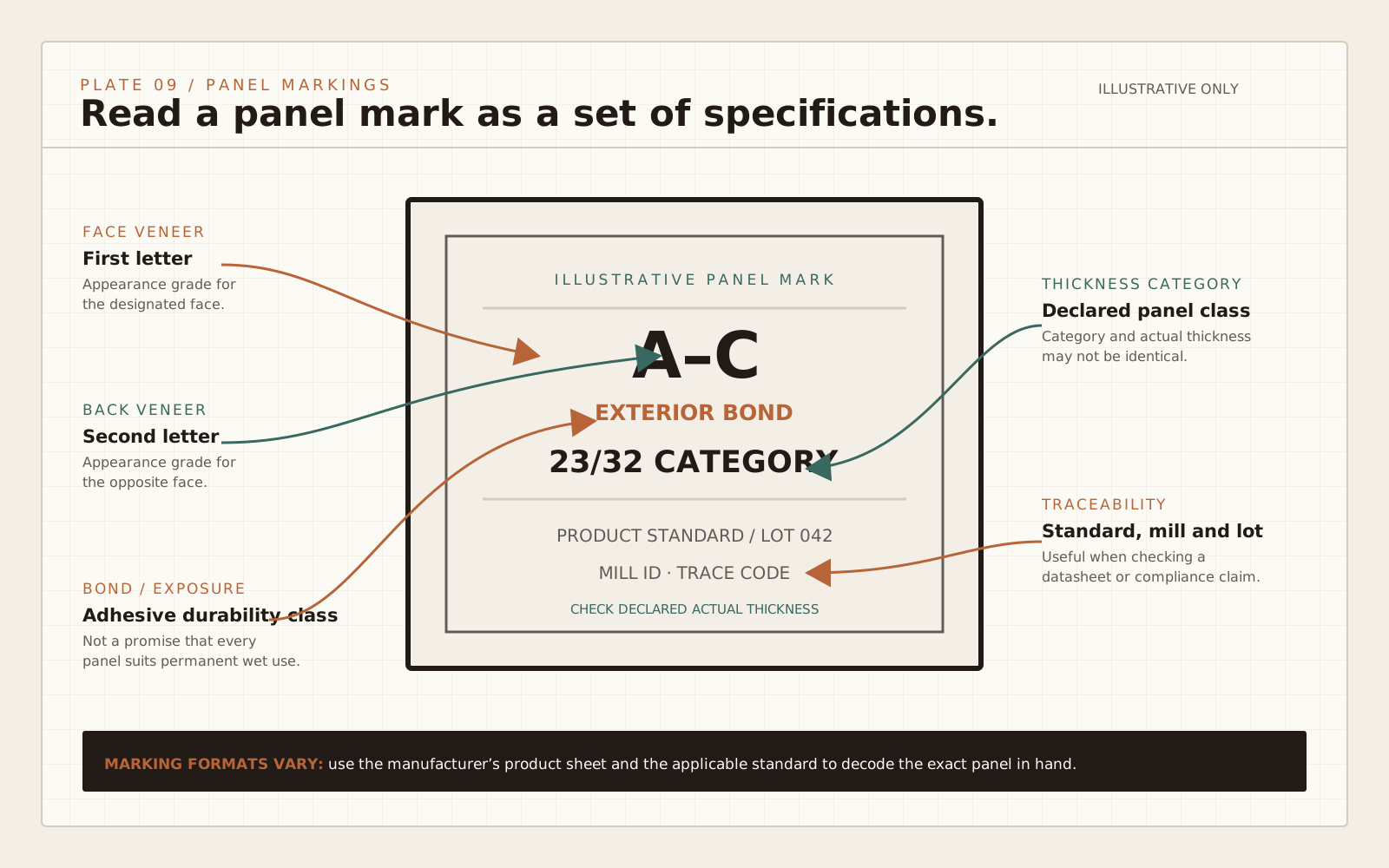
What plywood grades tell you
Plywood face grades mainly describe the appearance and permitted repairs or defects on the outer veneers. They help answer whether a face is suitable for a clear finish, paint, or a hidden utility surface. They do not, by themselves, tell you everything about core quality, span, bond classification, or suitability for permanent weather exposure.
Read the full panel mark and inspect the actual sheet. For furniture, a clean face can still cover a core with voids. For structural work, an attractive face does not replace the rated panel stamp, project specification, or local requirements. Treat the letter grade as one line in a material specification.
A, B, C, and D face grades
In the common North American softwood system, A is the smoothest appearance grade in ordinary retail use and has the fewest visible defects. B is also sanded but permits more repairs and natural characteristics. C and D are utility faces with progressively more visible knots, patches, and open defects allowed under their grade rules.
That order is useful, but it is not a universal beauty scale for every plywood family. Hardwood plywood, Baltic birch, imported panels, marine panels, and proprietary cabinet products may use different letter-number systems or their own specifications. Ask which standard applies.
For a clear-finished cabinet side, the quality and matching of the face veneer matter. For a painted shop cabinet, a sound B face may need less filling than a lower utility face. For a hidden cabinet back, paying for a perfect face may add no value. Choose the lowest grade that reliably supports the finish and exposure the part will actually receive.
How two-letter grades work
Two letters usually describe the two outer faces. In an A-C panel, the A face is the better face and the C is the back. That lets a manufacturer put quality where the project needs it. If both sides will be visible, look for a two-sided appearance grade. If only the outside will show, a high-grade face with a lower back can be efficient.
Mark the show face before cutting. It controls cut orientation, layout, and which side receives the cleanest saw exit. Also inspect the back even when it will be hidden. Deep defects near an edge can interfere with a dado, screw, or narrow strip.
The face letter does not guarantee grain match between sheets. For a bank of cabinets, lay candidate faces side by side and compare color, figure, patches, and veneer direction before buying. Sequential-looking panels are a visual selection task, not merely a grade-letter task.
Think about finish labor as part of the grade decision. Filling repeated patches, sealing open knots, or hiding football-shaped repairs may consume more time than the sheet savings justify. Conversely, a flawless back face adds cost without benefit when it will be permanently concealed.
CDX, Exposure 1, and Exterior are not the same question
CDX sheathing is commonly understood as a panel with a C face, D back, and an exposure-related bond classification. The X is often misread as a promise that the panel can live outdoors permanently. APA guidance distinguishes Exposure 1 panels, intended to withstand moisture during construction or similar temporary conditions, from Exterior panels intended for repeated wetting and redrying or long-term weather exposure.
Read the actual stamp. Look for the panel grade, performance category, span rating where applicable, bond classification, standard, and mill information. If a plan requires an Exterior-rated or specific structural panel, the letters C and D do not substitute for that requirement.
For woodshop fixtures, the practical lesson is simpler: ordinary sheathing can be useful where appearance is unimportant and the panel stays dry, but its faces and core may be frustrating for fine joinery. A furniture panel should be selected for machining and finish as well as for exposure.
Grade does not describe the whole panel
Core construction influences edge quality, screw holding, flatness, weight, and whether a dado exposes voids. Count and inspect the plies at a sample edge. Look for overlapping voids, loose inner layers, and thin face veneer. Higher face grade does not automatically mean a void-free core.
Thickness is another independent choice. Two panels with the same face grade may use different performance categories or measured thicknesses. Measure before setting a dado or choosing hardware. Bond classification is independent again: a smooth face can be on an Interior, Exposure 1, or Exterior panel.
Also check flatness and storage damage. A high-grade sheet stored poorly can be cupped, stained, or edge-damaged. Sight down the stack, inspect corners, and avoid sheets with delamination or crushed edges in the parts you need.
A plywood buying checklist
Start with the project surface: clear finish, paint, laminate, or hidden utility. Decide whether one or both faces show. Write the required bond classification and any rated-panel requirement separately. Then select thickness, core, and face grade.
At the rack, read the stamp rather than relying on a handwritten shelf card. Inspect both faces under good light. Check a factory edge for core construction, measure thickness, and compare flatness. Map defects against the cut list; a patch outside every finished part may be harmless, while a tiny core void on a narrow edge can ruin joinery.
Finally, record the panel description on the cut list. "Plywood" is not specific enough. A useful line includes species or face, face/back grade, core type if known, thickness or performance category, and bond classification. That record makes substitutions deliberate instead of accidental.
| Face grade | General surface expectation | Typical shop decision |
|---|---|---|
| A | Smooth, sanded, minimal visible defects | Clear finish or highly visible face |
| B | Sanded with more repairs or natural characteristics | Painted or visible work where minor repairs are acceptable |
| C | Unsanded utility face with knots and patches allowed | Hidden or utility surfaces |
| D | Unsanded face with more open defects allowed | Concealed utility use when the full panel rating fits |
| A-C example | A face, C back | One show face and one concealed face |