The shop-first answer
Use OSB for dry utility surfaces where appearance and refined edges do not matter: wall lining, enclosed bases, temporary fixtures, and some shop structures. Use plywood for cabinets, drawers, reusable jigs, shelves, and work surfaces where cleaner machining, lower edge damage, screw performance, or finish quality matters. For any structural building use, follow the rated panel stamp and project requirements rather than this furniture-focused comparison.
Both materials are engineered wood panels. The decision is not "strong versus weak" in the abstract. Rated OSB and plywood can be manufactured to the same performance categories, while individual products, grades, thicknesses, and exposure classifications differ. Match the exact panel to the exact job.
How OSB and plywood are built
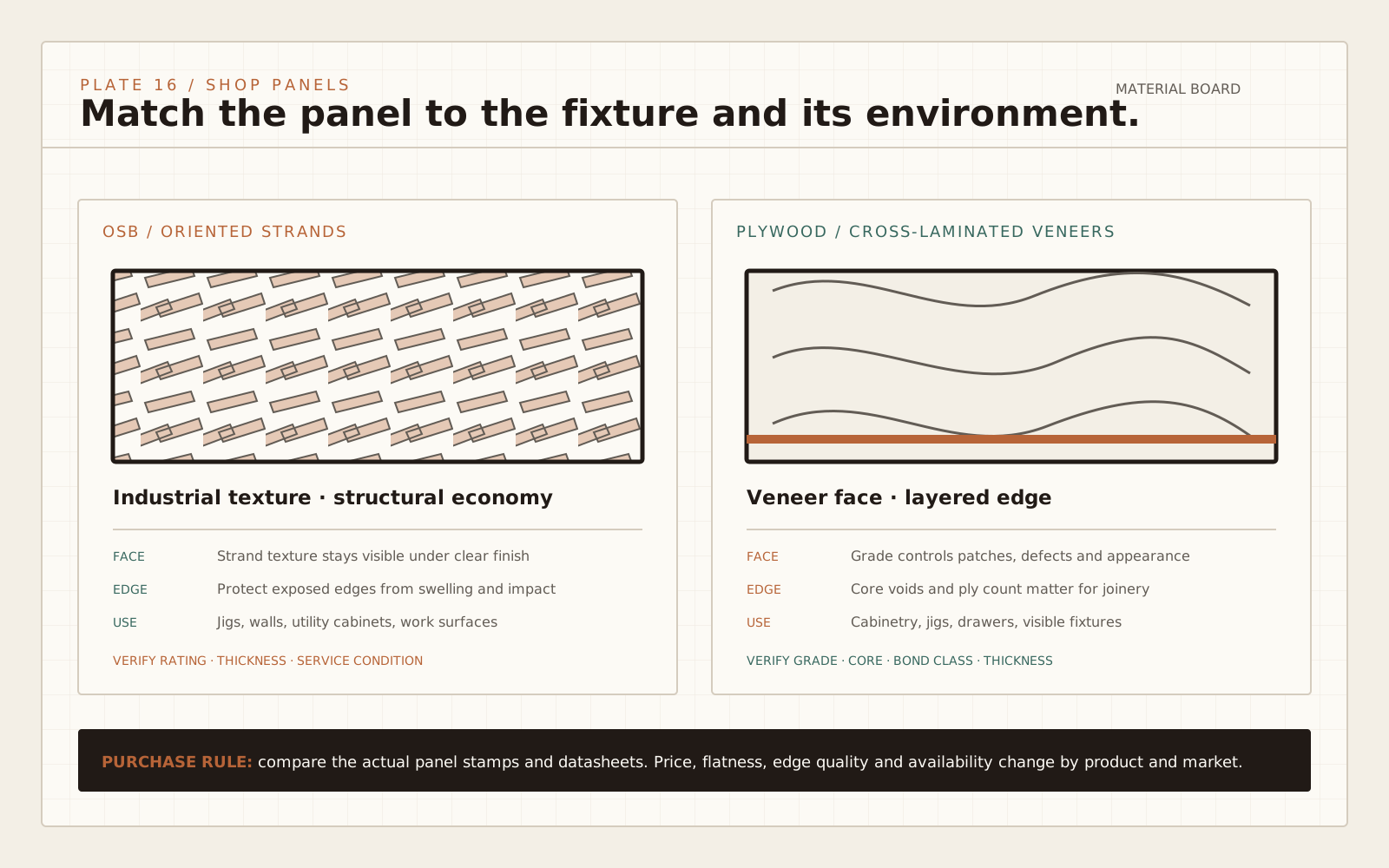
OSB is made from oriented wood strands bonded in layered mats. The strand pattern creates a uniform panel with few of the core voids associated with lower-quality plywood. Its surface remains textured and the cut edge exposes compressed strands.
Plywood uses veneer plies with alternating grain direction. It offers a smoother face in suitable grades, a layered edge, and a broad range from sheathing to cabinet-grade hardwood panels. Plywood quality can vary substantially; core voids, thin face veneer, and poor storage can erase its expected advantages.
Construction affects handling. OSB is often heavier and its exposed edges can be vulnerable to impact and swelling. Plywood is often easier to finish and its edges are usually more tolerant of ordinary shop handling, though they can splinter or delaminate if abused.
Choose by the workshop application
For wall sheathing inside a dry shop, OSB can create an economical surface that accepts screws where framing or backing is known. Paint can brighten it, although the strand texture remains. Plywood creates a smoother wall, cleaner cutouts, and better-looking exposed edges, which may be worth it around cabinets or a finished studio.
For cabinet boxes and drawers, plywood usually wins. Dados and rabbets are easier to inspect, edges accept banding or solid trim, and a cabinet-grade face can be painted or clear-finished. OSB can work in a rough base or enclosed stand, but repeated drawer-slide adjustment and narrow edge parts are not its strongest use.
For workbench bases, either panel can brace a frame when the design supports it. For the top, think beyond the label: flatness, smoothness, replaceability, impact, and clamping matter. OSB may serve as a lower sacrificial layer, while plywood or another smooth sheet becomes the replaceable skin. Do not assume a rough strand surface is suitable for accurate assembly.
For jigs, plywood is usually more durable at edges and more predictable for fences, runners, and repeated screw changes. OSB can be fine for one-time templates or broad temporary guides where the cut edge is not a reference surface.
For tool carts, divide the decision again. A plywood drawer bank benefits from clean slides and durable edges, while an enclosed OSB plinth may perform perfectly. Keeping the materials separate also makes a damaged utility base easier to replace.
Moisture and edge damage
Fine Homebuilding's comparison notes that both panel types are wood products and can be damaged by prolonged wetting. Plywood tends to absorb water faster and dry faster, while OSB can retain moisture and may keep edge swelling after it dries. Modern OSB products vary, so read the bond classification and manufacturer guidance.
In a workshop, moisture often comes from a concrete floor, an exterior wall, a leak, or wet lumber. Store panels off the slab, keep cut edges away from standing water, and seal surfaces only as part of a sound moisture plan. Coating a panel does not fix water entering the building assembly.
Protect corners during transport. A crushed OSB edge is difficult to restore as a straight reference. Plywood corners can also split, but a quality panel generally tolerates shop movement better. Map damaged areas outside finished parts.
Cutting, fastening, and finishing
Support full sheets on foam or a sacrificial grid. Use a sharp blade suitable for sheet goods and set up extraction; both products create dust and adhesive-containing debris. Plywood face veneer needs tearout control. OSB's coarse edge may need sanding or a solid facing where it becomes a hand-contact surface.
Fasten according to the panel and application. For shop furniture, predrill near edges and use screws intended for the material. Do not rely on repeated screw removal from a damaged OSB edge. Where cabinets or tool mounts carry meaningful load, fasten through the panel into known framing or a designed structure.
OSB can be painted, but the strand texture telegraphs through ordinary coatings. Plywood offers more finish options: paint, clear coat, stain on a suitable hardwood face, laminate, or edge banding. If the project must look like furniture, the preparation saved by plywood often matters more than the raw sheet difference.
Read the stamp and combine materials
Rated panels carry information about grade, span or performance category, bond classification, and manufacturing standard. Read that information whenever the panel is part of a wall, roof, floor, or other structural assembly. Do not transfer a shop-cabinet recommendation into building work.
A hybrid shop uses each material where its behavior matters. Line broad dry utility walls with a suitable OSB product, build precise cabinets and jigs from plywood, and add replaceable skins to hard-use surfaces. Keep one material from forcing compromises throughout the entire room.
Before buying, list visibility, moisture risk, edge exposure, hardware changes, finish, span, and expected service life. Select the exact product only after those questions are answered.
| Workshop use | Likely better starting point | Reason |
|---|---|---|
| Dry utility wall lining | OSB or rated plywood | Choose by finish, stamp, and budget |
| Cabinet boxes and drawers | Plywood | Cleaner joinery, edges, and finish |
| Reusable precision jig | Plywood | More durable reference edges |
| Temporary broad fixture | OSB | Utility surface where refinement is unnecessary |
| Workbench base bracing | Either suitable panel | Design and fastening control the result |
| Smooth replaceable worktop skin | Plywood or another smooth panel | Flat, clean assembly reference |