Why Hardwood Prices Vary So Much
Hardwood is not a commodity in the way dimensional SPF lumber (the 2x4s and 2x6s at home improvement stores) is. Those boards are fast-growing softwood species, machined to standard sizes, and sold at scale by national chains. Hardwood lumber is a different supply chain entirely: slower-growing trees, random widths and lengths, harvested from private land and small sawmills, and graded by hand at regional dealers.
The result is that prices vary significantly between species, grades, widths, and regions. Two boards labeled walnut at the same dealer can carry meaningfully different prices if one is 4 inches wide and one is 14 inches wide. Understanding the underlying factors lets you price projects accurately before you start.
The Four Factors That Set a Species Price
-
How fast the tree grows. Slow-growing species produce denser, finer-grained wood — and take decades longer to reach harvest size. A black walnut tree large enough to produce wide, usable lumber may take 60 to 80 years. Fast-growing species like poplar or soft maple reach harvestable size much sooner.
-
Geographic range. Species that only grow in certain regions are more expensive to ship to buyers outside that region. Black walnut is common in the eastern US but carries a premium in Europe or the Pacific Northwest. Teak is native to Southeast Asia; every board sold in North America is imported.
-
Demand. Some species have sustained demand from furniture makers, instrument builders, and architectural millwork, keeping prices elevated even when supply is reasonable. Walnut, cherry, and quartersawn white oak consistently attract strong demand. Lower-demand species — soft maple, poplar, alder — stay lower in price even at comparable quality.
-
Processing requirements. Tropical hardwoods and very dense domestic species require more energy to saw, dry, and mill than moderate-density woods. Kiln-drying schedules are longer for thick and dense stock; some species are prone to checking during drying, which increases waste and thus per-board-foot cost.
Hardwood Species Cost Tiers
The table below groups common species into relative cost tiers.
Note: prices shift with lumber markets and vary significantly by region, grade, and width. Use these tiers to understand relative costs and budget proportionally — verify current prices with your actual supplier before committing to a project budget.
What Grade Means and Why It Matters
Hardwood lumber is graded by a different system than softwood. The most common grading standard in North America is the National Hardwood Lumber Association (NHLA) system, which grades based on the percentage of clear (defect-free) material a board yields:
FAS (Firsts and Seconds) — the top grade. Boards must yield a high proportion of long, clear pieces. This is what you see at premium hardwood dealers and what most furniture and cabinetwork is specified in. It costs the most.
Select and Better — slightly narrower boards than FAS, but similar clear yield. Often a practical alternative for furniture parts that are shorter or narrower than FAS minimum sizes.
No. 1 Common — allows more defects; lower clear yield. Used for shorter parts, rustic aesthetics, or projects where knots and character are desired. Significantly less expensive than FAS.
No. 2 Common — more defects still; suitable for small parts, craft projects, and utility woodworking. Least expensive grade widely available.
For most fine furniture, FAS or Select is the right grade. For projects where you're cutting many small parts from a cut list, No. 1 Common can save substantial money — the defects fall in areas you were cutting out anyway.
Surfaced vs Rough-Sawn: The Price Difference
Hardwood is sold in three surface states:
Rough-sawn (rough) — just off the saw, no milling. Lowest cost per board foot. Requires jointing and planing to get flat, square surfaces. Needs a jointer and planer, or handwork with hand planes.
S2S (surfaced two sides) — both faces planed flat and parallel, edges still rough. The most common state at hardwood dealers. Usable without a planer but edges still need ripping to a straight line.
S4S (surfaced four sides) — all four surfaces milled. Costs more per board foot. Common at home improvement stores for project lumber (poplar, pine). Ready to use immediately without milling equipment.
The premium for surfacing is real but modest for most species. The more important factor is whether you have a jointer and planer — if not, S2S or S4S is worth the extra cost.
Where You Buy Changes What You Pay
Hardwood dealers and lumber yards are the primary source for furniture-grade material — lower prices per board foot than retail alternatives, wider species selection, and staff who understand lumber.
Home improvement stores (Lowe's, Home Depot, Menards) carry very limited hardwood selections, typically poplar and sometimes oak and maple in S4S form. Prices per board foot are higher than a specialty dealer, but these stores are convenient and accept returns.
Online hardwood retailers can ship direct to your shop. Prices are often competitive with local dealers, but you pay shipping (significant for lumber) and cannot inspect boards before purchase. Best used for species not available locally.
Lumber auctions and estate sales occasionally surface significant quantities of hardwood at below-market prices. Worth watching if you're willing to process rough material.
Local sawyers and portable sawmill operators can be an excellent source for wide slabs, figured wood, and locally-milled species at favorable prices. Quality and consistency vary more than with established dealers.
Buying Smarter: Getting More Wood for Your Budget
Buy rough and mill it yourself. If you have a jointer and planer, rough lumber typically costs noticeably less per board foot than surfaced stock of the same species and grade. The savings compound on large projects.
Use secondary species for hidden parts. Interior cabinet carcase parts — drawer boxes, shelf supports, back rails — don't need to be walnut or cherry. Poplar and soft maple are much less expensive and finish cleanly. Reserve the premium species for visible parts.
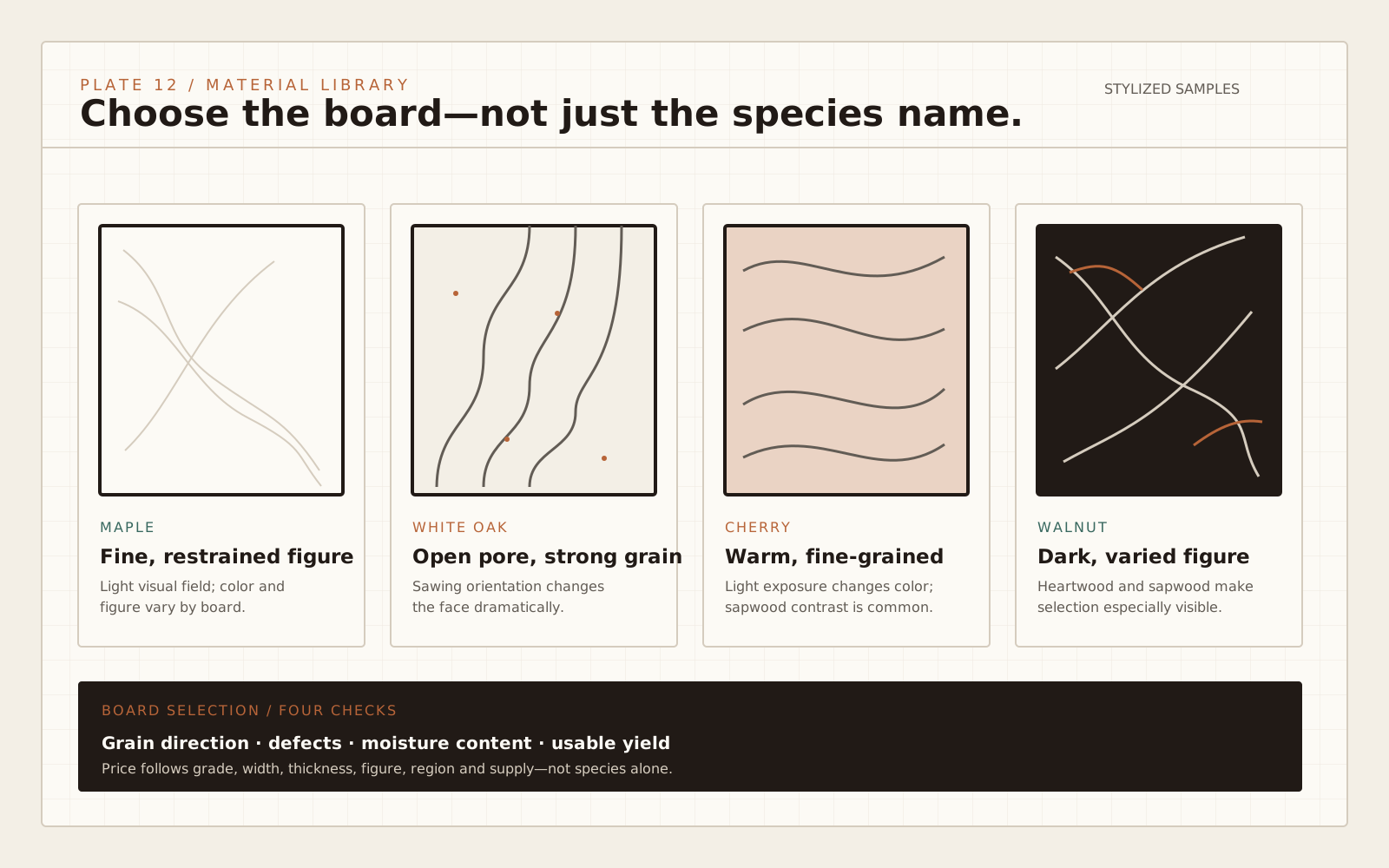
Select your own boards. Most hardwood dealers let you hand-select boards from the pile. Board widths, figure, color matching, and defect placement vary significantly within the same grade. Hand-selecting dramatically increases your usable yield and lets you build a project with consistent appearance.
Buy a little extra. Planning a project close to your expected board-foot total risks a second trip to the same dealer hoping to find matching boards. Stock the same lot while it's available.
Quartersawn is more expensive but sometimes necessary. The dimensional stability of quartersawn stock is worth the premium for tops, instrument components, and floor installations. For painted cabinets or hidden parts, save the extra cost.
| Cost tier | Species examples | Why this tier | Common uses |
|---|---|---|---|
| Budget | Poplar, alder, soft maple, knotty pine | Fast-growing, abundant, lower demand from fine furniture makers | Painted furniture, interior trim, drawer boxes, practice projects |
| Mid-range | Hard maple, red oak, white oak, ash, birch | Plentiful domestic supply; strong but steady demand; widely available | Furniture, flooring, cabinetry, tool handles; the backbone of most furniture shops |
| Premium domestic | Black walnut, cherry, figured maple, quartersawn white oak | Slower growth; higher demand; wide walnut especially scarce; figured material adds premium | Fine furniture, instrument making, high-end cabinetry, heirloom pieces |
| Exotic (imported) | Teak, mahogany, purpleheart, padauk, wenge | Import cost; some species face supply restrictions; strong demand for color and figure | Accent pieces, turning blanks, specialty furniture; also relevant sustainability questions |
| Figured / specialty | Curly maple, burl walnut, quilted maple, crotch pieces | Rarity of figure; heavy selection loss at the mill; specific demand from makers and collectors | Show-wood surfaces, instrument tops, decorative pieces; used sparingly even by professionals |