The practical buying answer
Buy a circular saw first when you need one portable saw for framing lumber, rough cuts, bevels, and occasional sheet breakdown, especially if you can add a straight guide and a fine-finish blade. Buy a track saw when you regularly build cabinets or furniture from sheet goods and value fast layout, repeatable straight cuts, plunge capability, edge splinter control, and integrated dust collection.
A circular saw with a well-made zero-clearance guide can produce excellent cabinet parts. A track saw makes that level of work easier to repeat and reduces setup friction. The difference is workflow consistency more than a magical difference in motor technology.
What a track saw adds
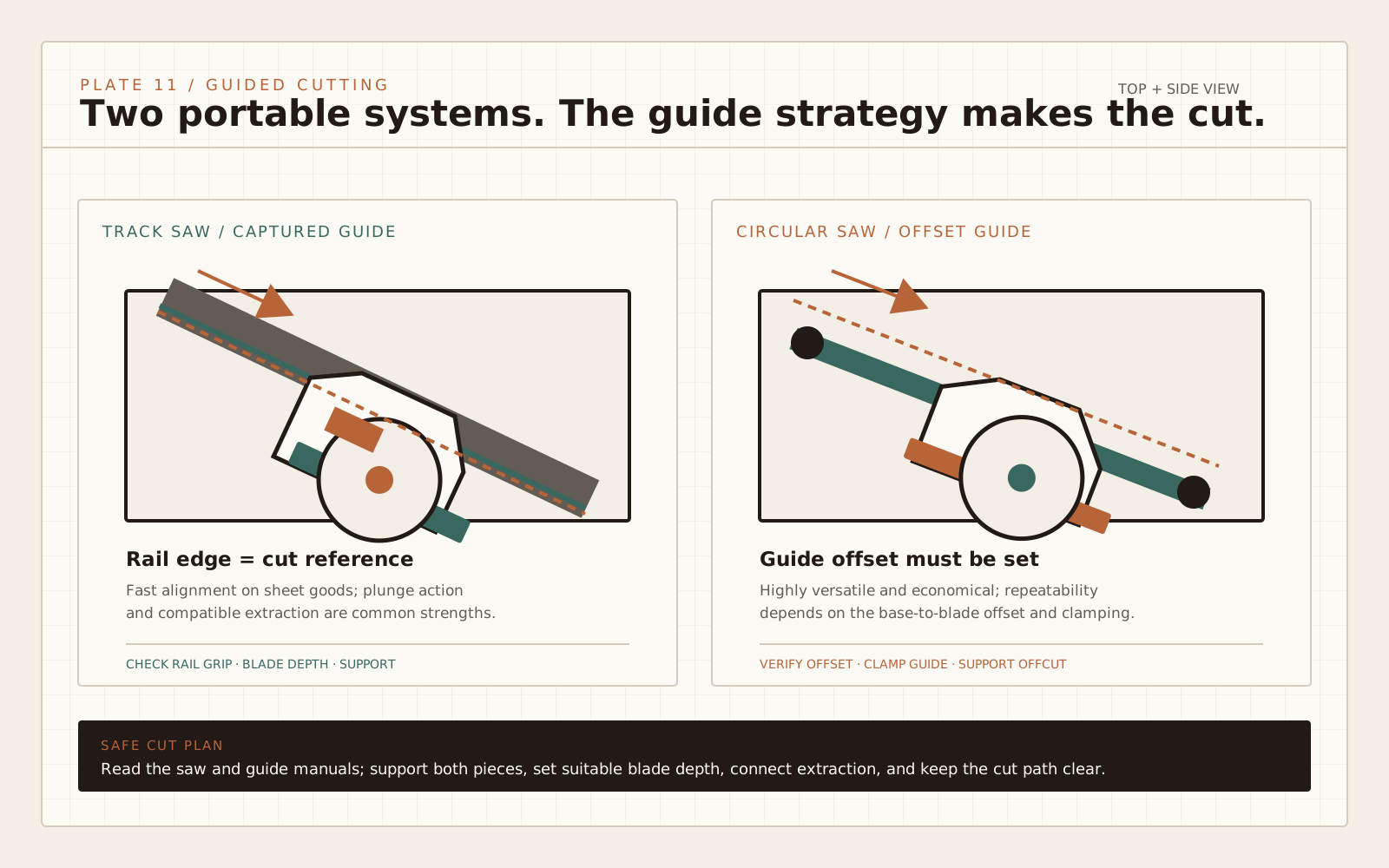
A track saw rides on a dedicated rail with the blade aligned to a splinter strip at the cut line. The user places the strip on layout marks instead of measuring an offset from the saw base. The rail resists sideways drift, and many systems include non-slip backing or clamps.
The blade plunges into the work, so an interior cut can begin away from a sheet edge when the tool and procedure allow it. A riving knife on many models follows the blade and helps manage a closing kerf. The blade is more enclosed than on a typical circular saw, which supports effective dust extraction and reduces exposed blade during normal use.
The rail also supports bevel cuts while keeping the cut line predictable on compatible systems. Accessories such as rail connectors, parallel guides, squares, and clamps can improve repetition, but they increase storage, setup choices, and total system cost.
What a circular saw with a guide can do
A standard circular saw is versatile and easy to carry. With a sharp sheet-goods blade and a straightedge, it can break down plywood accurately. A shop-made zero-clearance guide records the exact offset: place its cut edge on the layout line, clamp it, and run the saw base along the fence.
The guide must match the specific saw and blade position. Changing blades can shift the kerf. The saw can drift if the base loses contact with the fence, and the user must manage a more open blade, cord or battery, and dust path.
For occasional cabinet projects, that extra setup may be acceptable. The same saw can then crosscut construction lumber and handle tasks a rail does not suit. Pair it with rigid foam support and a good guide before assuming clean plywood work requires a new saw.
Compare cut quality, dust, and safety
WOOD Magazine notes that a circular saw with an upgraded blade and guide can rival a track saw's cut. A track saw improves consistency through its zero-clearance base, splinter strip, guided travel, and purpose-selected blade. A maintained strip is essential; once damaged or mismatched to the blade, it no longer marks or supports the edge accurately.
Dust collection is usually better on a track saw because more of the blade is enclosed and the port is central to the design. A circular saw often throws chips around the guard and front opening even with an extractor. Neither eliminates airborne dust, so use suitable extraction and respiratory protection.
Both saws can kick back if the kerf pinches, the material moves, the blade is dull, or the operator twists the saw. Support both pieces without trapping the blade. Let it reach full speed, keep the base or rail seated, and never reach under the sheet. Follow the manual for plunge cuts, bevels, and guard operation.
Choose by project frequency and workflow
Count the sheet cuts in a typical month. A few rough breakdown cuts favor the circular saw already in the shop. Repeated cabinets, built-ins, closet systems, and furniture panels make the track saw's quick alignment and clean edge more valuable.
Consider space. A small shop may not safely handle full sheets on a table saw; a track saw on foam brings the tool to the sheet. Rails need protected storage so they remain straight. A circular-saw guide can be shop-made and replaced cheaply but may be bulky.
Consider the entire system, not the bare saw. Include rails long enough for common sheets, connectors, clamps, extraction hose, blade availability, batteries, and service. Check rail compatibility before assuming future expansion across brands.
If budget allows only one saw and the work is varied, a circular saw plus guide is the flexible choice. If the shop already owns a circular saw and sheet work is frequent, a track saw adds a distinct production workflow rather than duplicating the same role.
A clean sheet-breakdown process
Place the sheet on rigid foam or a sacrificial grid with the show face oriented for the saw. Mark the kept side and confirm the cut plan. Inspect the blade and splinter strip or guide edge. Set depth according to the manual and just beyond the sheet and support.
For a track saw, place the strip on the cut line, secure the rail if needed, connect extraction, and make a scoring pass when the surface demands it and the manual permits. For a circular saw, account for guide offset or use a zero-clearance guide, clamp it on the kept side, and verify the blade will cut the waste.
Make one test cut, check square and edge quality, then batch parts without changing the setup unnecessarily. Label every panel as it comes off the sheet. Accuracy comes from preserving references after the clean cut, not from the purchase alone.
| Factor | Track saw | Circular saw with guide |
|---|---|---|
| Cut-line setup | Rail edge sits on the line | Offset or zero-clearance guide required |
| Straight-cut repeatability | High with a sound rail | High with a rigid, well-clamped guide |
| Tearout control | Integrated splinter strip | Blade, face orientation, guide, and backup |
| Plunge cuts | Core capability on most models | Not the normal workflow |
| Dust collection | Usually better integrated | Usually more open |
| General versatility | Specialist for guided straight cuts | Broader rough and construction use |
| Best fit | Frequent sheet-goods furniture work | First saw or occasional sheet work |
Primary references
Use the current product label, technical data sheet, safety data sheet and machine manual for the exact item in your shop. These primary references frame the general guidance on this page.
Frequently asked
Can a circular saw cut as accurately as a track saw?
Yes with a sharp blade, rigid zero-clearance guide, full support, and careful setup. A track saw makes that accuracy faster and easier to repeat.
Is a track saw worth it for plywood?
It often is when plywood cabinets or furniture are frequent projects. For occasional sheets, a circular saw and good guide may be enough.
Does a track saw replace a table saw?
It can replace many sheet breakdown and straight panel cuts, but ripping narrow repeated parts and other table-saw tasks may still favor a stationary setup.
Why is my track saw splintering plywood?
Check blade sharpness, rail placement, splinter-strip condition, sheet support, and whether a shallow scoring pass is appropriate.
Can I use any circular saw on a track?
Some guides accept compatible circular saws, but a dedicated track-saw rail and plunge mechanism are a system. Confirm compatibility instead of assuming the bases interchange.