The furniture-maker's answer
Kiln-dried lumber is usually the simpler choice for indoor furniture because a controlled kiln can bring stock to a lower, more consistent moisture condition on a practical schedule. Properly air-dried lumber can also make excellent furniture. The label alone does not decide quality: current moisture, drying defects, storage, species, thickness, and the environment where the piece will live all matter.
Do not treat "kiln-dried" as permanently dry or "air-dried" as unfinished. Wood continues exchanging moisture with surrounding air after either process. A board dried correctly can gain moisture in poor storage, and a carefully air-dried board may be well suited to a particular shop. Verify the board now, not only its history.
What each drying method controls
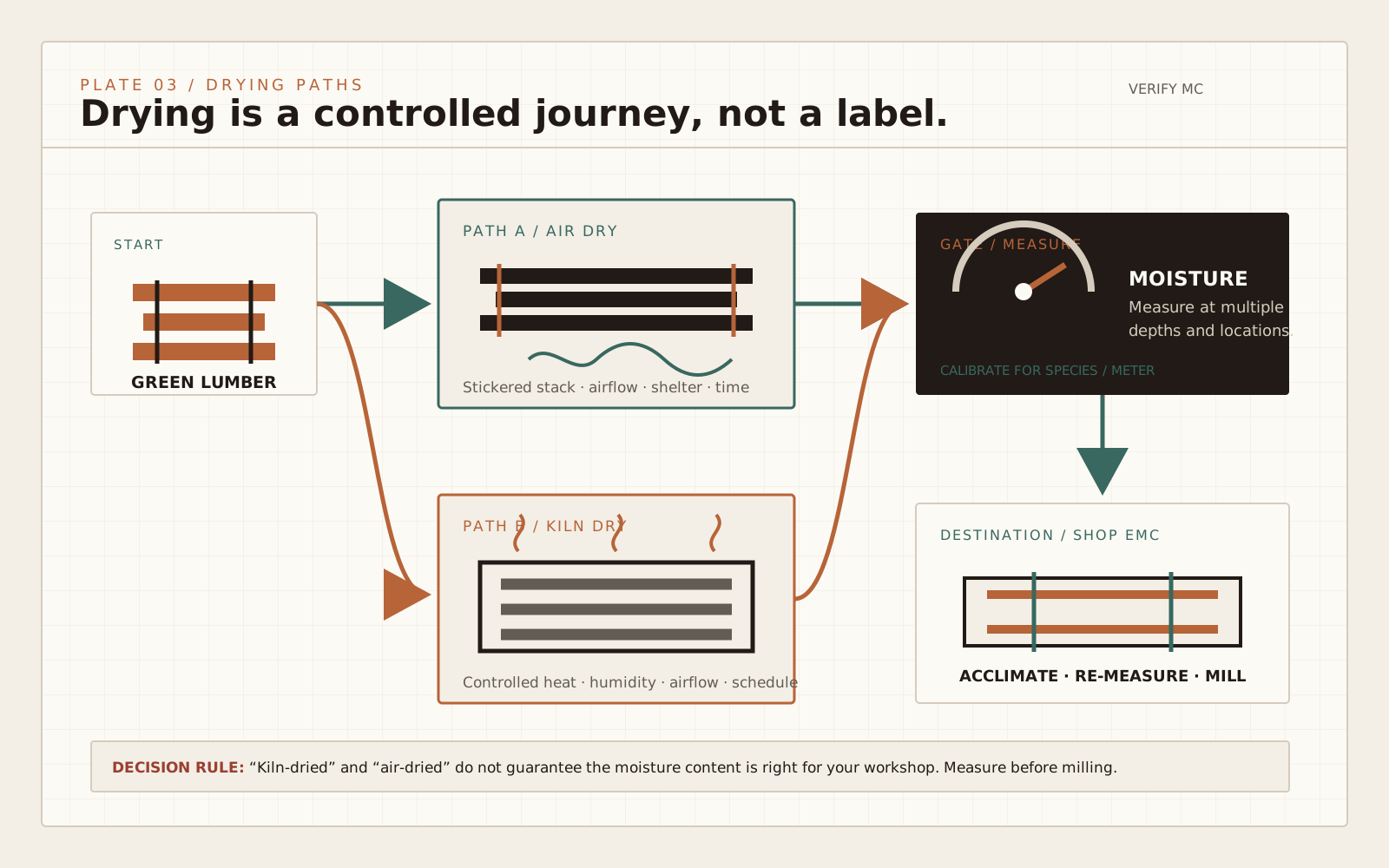
Air drying stacks stickered lumber where ambient air moves through the pile. Weather, relative humidity, temperature, board thickness, species, stacking, and shelter influence the rate. It uses little specialized energy but takes substantial time and cannot normally drive moisture below the equilibrium allowed by the local climate.
Kiln drying places stickered lumber in a chamber where temperature, humidity, and air movement follow a schedule. The operator can change conditions as the load dries, making the process faster and the endpoint more controllable. Commercial kilns also use heat schedules that can address insects, although a furniture buyer should not assume every kiln cycle or species was handled identically.
Either method can fail. Air-dried stacks can stain, mold, check, or warp if airflow and protection are poor. A kiln schedule that moves too aggressively can cause surface checks, internal checking, collapse, or case-hardening stresses. Good lumber is the result of a suitable process and storage, not simply the presence or absence of a kiln.
Moisture condition matters more than the label
Wood drying references describe equilibrium moisture content: wood gains or loses moisture until it approaches balance with its surroundings. That means the useful question is whether the board is close to the condition expected in service. Indoor furniture in a conditioned home may need a different target than an outdoor gate or an unheated shop fixture.
Use a calibrated moisture meter as a screening tool and compare several boards from the stack. Meter readings vary with species, temperature, meter type, and depth, so follow the instrument instructions. Look for consistency between the surface and, where practical, a freshly cut interior. A single reading at one end is not enough evidence for an expensive build.
Also inspect storage. Lumber stacked directly on concrete, exposed to rain, or packed without airflow can change after drying. Ask when it was dried, where it has been stored, and whether the seller has current readings. If the answer is unclear, keep more milling margin and allow more observation time.
Color, workability, and drying defects
Drying method can influence color and working character in some species, but broad claims such as "air-dried always has better color" are too simple. The kiln schedule, temperature, species, log condition, and time all contribute. Compare actual boards under clean light and plane a small area if the seller permits.
Inspect ends and faces for checks. Sight along the board for bow, crook, cup, and twist. Look for sticker shadow or stain, honeycomb visible at an end, and unusual reactions when a test rip releases stress. Case-hardened stock may pinch or open during ripping; that behavior matters more to your project than a perfect-looking outer face.
Air-dried stock may offer wide, locally sawn boards and distinctive material unavailable through ordinary retail channels. Kiln-dried stock may offer more predictable throughput and availability. Choose the board and supplier, not a romantic story about the drying method.
How to buy and acclimate either type
Bring a cut list, moisture meter, tape, and straightedge. Group parts by thickness and visibility. Measure the candidate boards, check moisture at multiple points, and ask how the yard tallies rough thickness. Record the shop's normal conditions so a reading has context.
On arrival, sticker lumber so air reaches both faces and keep it away from damp floors and direct heat. Acclimation does not mean leaving a tight stack untouched for an arbitrary number of days. Monitor representative boards until readings and dimensions stop changing meaningfully for your process. Very thick stock takes longer to equalize internally than thin boards.
Write the date and readings on painter's tape attached to a board end. A short record makes a trend visible and prevents memory from turning one isolated measurement into a false sense of stability.
Avoid placing wet lumber in the final living room as a shortcut. Store it in a controlled workspace and manage dust and pests appropriately. If salvaged or locally milled material has uncertain insect history, consult a competent kiln operator rather than improvising a heat treatment.
A low-risk milling sequence
Rough-cut parts with extra length and width. Make an initial flattening pass, establish one edge, and plane the parts close to thickness while leaving a small reserve. Sticker them again. After a rest period appropriate to the stock, check for movement and make the final passes.
For wide panels, keep neighboring boards together through selection so color and grain remain coordinated. Alternate operations across the batch rather than taking one board from rough to final while the others wait. If a board moves dramatically, reassign it to shorter or narrower parts instead of forcing it into a critical panel.
Kiln-dried versus air-dried is therefore a useful first filter, not the final verdict. Current condition, defects, supplier knowledge, and a staged milling process determine whether the lumber becomes stable furniture.
| Factor | Kiln-dried | Air-dried | What to verify |
|---|---|---|---|
| Drying control | Temperature, humidity, and airflow scheduled | Ambient weather and airflow | Current moisture and consistency |
| Speed | Generally faster | Generally slower | Drying date and storage since |
| Possible defects | Case hardening, checks, collapse if mismanaged | Stain, checks, warp if stack is poor | Ends, faces, and behavior during a test cut |
| Furniture use | Often ready sooner for conditioned interiors | Suitable when properly dried and conditioned | Match to the service environment |
| Buying advantage | Consistency and availability | Local, wide, or distinctive boards | Actual board quality |
Primary references
Use the current product label, technical data sheet, safety data sheet and machine manual for the exact item in your shop. These primary references frame the general guidance on this page.
Frequently asked
Is kiln-dried wood always better for furniture?
It is often more convenient and consistent, but a poor kiln schedule or poor storage can still produce problem stock. Properly air-dried lumber can make excellent furniture.
Can air-dried lumber be used indoors?
Yes, when its moisture condition is appropriate for the indoor environment and it has been inspected and milled with movement in mind.
Does kiln-dried wood need to acclimate?
It can still exchange moisture after kiln drying. Monitor the actual boards in the shop rather than relying on the kiln-dried label alone.
How can I tell whether lumber is dry enough?
Use a suitable moisture meter at several locations, compare boards, inspect storage history, and watch dimensions through staged milling.
Does kiln drying stop wood movement forever?
No. Wood remains hygroscopic and responds to its environment after either drying method. Furniture design still needs to allow seasonal movement.