The difference at a glance
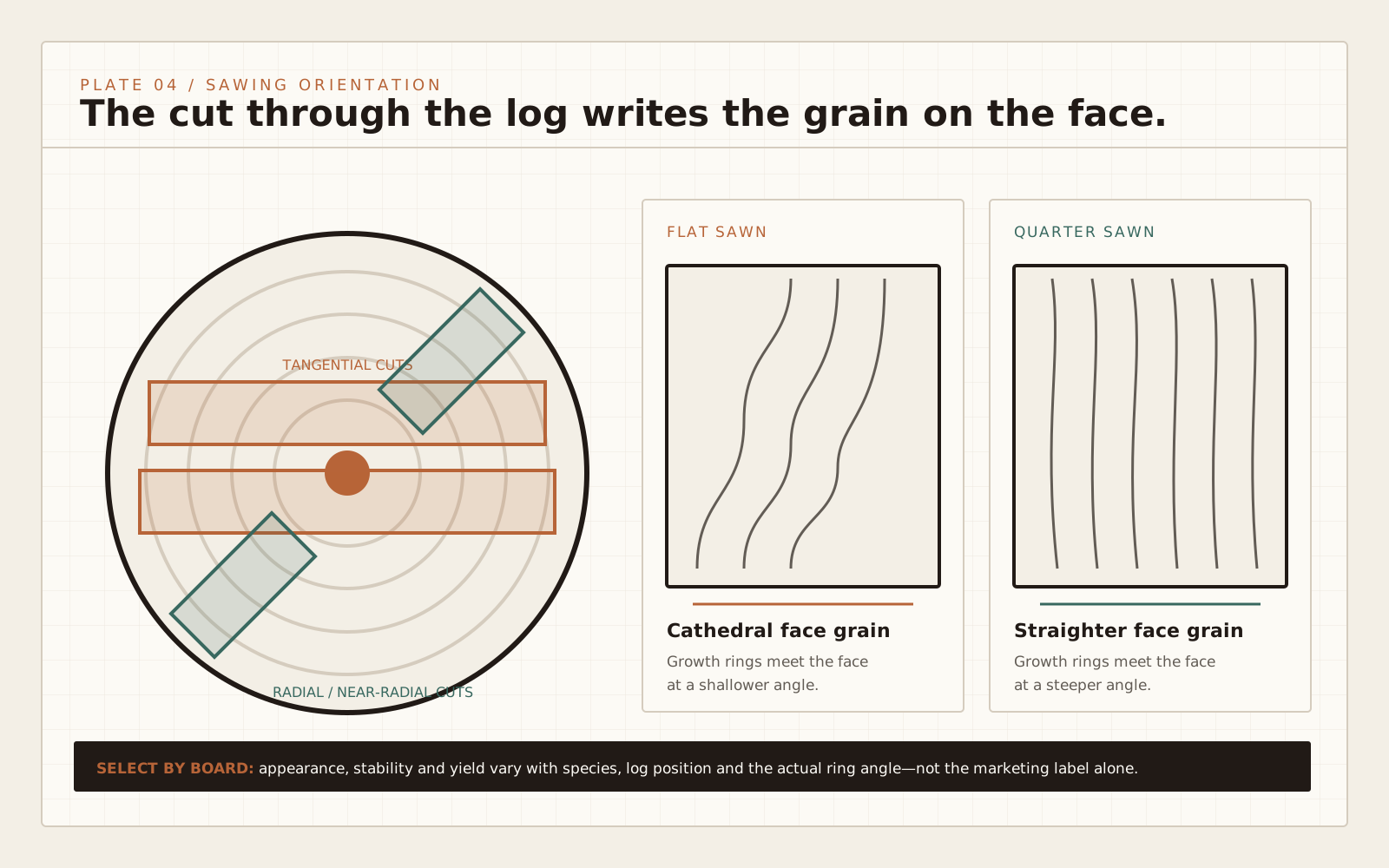
Flat-sawn, also called plain-sawn, lumber commonly shows growth rings running more nearly across the width of the board's end and cathedral-shaped grain on the face. Quarter-sawn lumber shows rings oriented more nearly from face to face and straighter face grain. In species with prominent rays, especially oak, quarter-sawn faces can display distinctive ray fleck.
Quarter-sawn stock is generally more dimensionally stable across its width and less prone to cupping than flat-sawn stock. Flat-sawn boards are more common, often wider, and usually make more efficient use of the log. The right choice depends on appearance, part orientation, movement risk, availability, and cost.
How to identify the cut on a real board
Look at the end grain first. Do not identify a board only from a photograph of the face. In flat-sawn material, the growth rings meet the broad face at a shallow angle through much of the board. In quarter-sawn material, they meet the face at a steeper angle. Industry definitions use angle ranges, but the boundaries vary, and suppliers may group rift-sawn and quarter-sawn material differently.
Next, read the face. Flat-sawn oak often shows arches or cathedrals. Quarter-sawn oak tends to show straighter lines plus ray fleck crossing the grain. Other species may show subtler differences, and figure can be affected by the board's exact location in the log. A straight-grained face is evidence, not proof; confirm with the end.
Finally, inspect both ends. A board can change ring orientation across its width, especially when it was produced in a high-yield sawing pattern. Narrow parts ripped from one wide board may therefore behave and look differently. Mark the ring direction on each blank before deciding where it belongs.
Grain figure and visual effect
Cut orientation is a design choice. Flat-sawn cathedral grain can make a broad panel lively and directional. It can also look busy when several boards are edge-glued without a layout plan. Quarter-sawn straight grain can produce a calmer, more regular field, while ray fleck can become the dominant feature in oak.
Lay boards together under the lighting in which the piece will be seen. Flip and reorder them before milling to final width. Decide whether the goal is continuity, symmetry, or purposeful contrast. A premium cut is wasted when its most attractive face is hidden against a wall or inside a cabinet.
Rift-sawn lumber is related but not identical. It aims for straighter grain with fewer dramatic ray flecks and a more consistently radial ring orientation. Sellers sometimes use "rift and quartered" as a combined category. Ask what the bundle actually contains and select individual boards when the visual requirement is strict.
Movement, cupping, and project placement
Wood movement is greatest across the grain, but tangential and radial movement differ. Flat-sawn boards present more tangential orientation across their width, which is why they generally move more in width and cup more readily. Quarter-sawn boards present more radial orientation across the width and tend to remain flatter.
That does not make quarter-sawn lumber motionless. A wide quarter-sawn panel still needs joinery that allows seasonal change. A poorly dried or stressed quarter-sawn board can still warp. Grain orientation is one risk factor among moisture condition, species, width, thickness, and construction.
Place boards deliberately. Quarter-sawn stock is valuable in wide door stiles, tall narrow parts, shelves where edge appearance matters, and components where straight grain supports a consistent look. Flat-sawn stock works well in broad visible panels, secondary parts, and designs that accommodate movement. For a glued panel, alternating ring directions is not a universal cure; selecting stable, well-dried boards and building a sound attachment system matters more.
Buying and milling checklist
At the lumberyard, inspect end grain, face figure, width, flatness, and moisture. Confirm whether the price applies to true selected quarter-sawn stock or a mixed rift-and-quartered bundle. Mark the best face and intended part on each board before cutting.
Rough-cut with room to move, flatten reference faces, and let critical parts rest before final milling. Preserve orientation marks through the process. During glue-up, arrange grain for appearance and keep the reference faces aligned. Attach wide solid-wood parts with hardware or joinery that permits movement regardless of how the log was sawn.
| Factor | Flat-sawn / plain-sawn | Quarter-sawn |
|---|---|---|
| End-grain rings | More nearly parallel to the broad face | More nearly perpendicular to the broad face |
| Common face figure | Cathedrals and sweeping grain | Straighter grain; ray fleck in some species |
| Width movement | Generally greater | Generally lower |
| Cupping tendency | Generally higher | Generally lower |
| Board width and yield | Often wider and higher-yield | Often narrower and lower-yield |
| Best reason to choose | Width, availability, or cathedral figure | Stability or a specific straight/ray-fleck look |
Primary references
Use the current product label, technical data sheet, safety data sheet and machine manual for the exact item in your shop. These primary references frame the general guidance on this page.
Frequently asked
Is quarter-sawn wood stronger than flat-sawn wood?
Cut orientation changes movement, stiffness direction, and defect behavior, but a blanket strength claim is not useful for furniture selection. Choose by the part's load, grain, defects, and design.
How can I tell if oak is quarter-sawn?
Check for growth rings meeting the face at a steep angle on the end grain, then look for straighter face grain and possible ray fleck. Confirm both ends when the board is wide.
Does quarter-sawn lumber still move?
Yes. It usually moves less across its width than flat-sawn stock, but it still responds to humidity and needs movement-friendly joinery.
What is rift-sawn lumber?
Rift-sawn stock has growth rings oriented more radially and often shows straight grain with less ray fleck. Definitions and retail groupings vary, so inspect the actual bundle.
Can I mix flat-sawn and quarter-sawn wood in one project?
Yes. Use each where its appearance and behavior help, but coordinate adjacent visible parts and allow movement in all solid-wood assemblies.