Use the calculator first
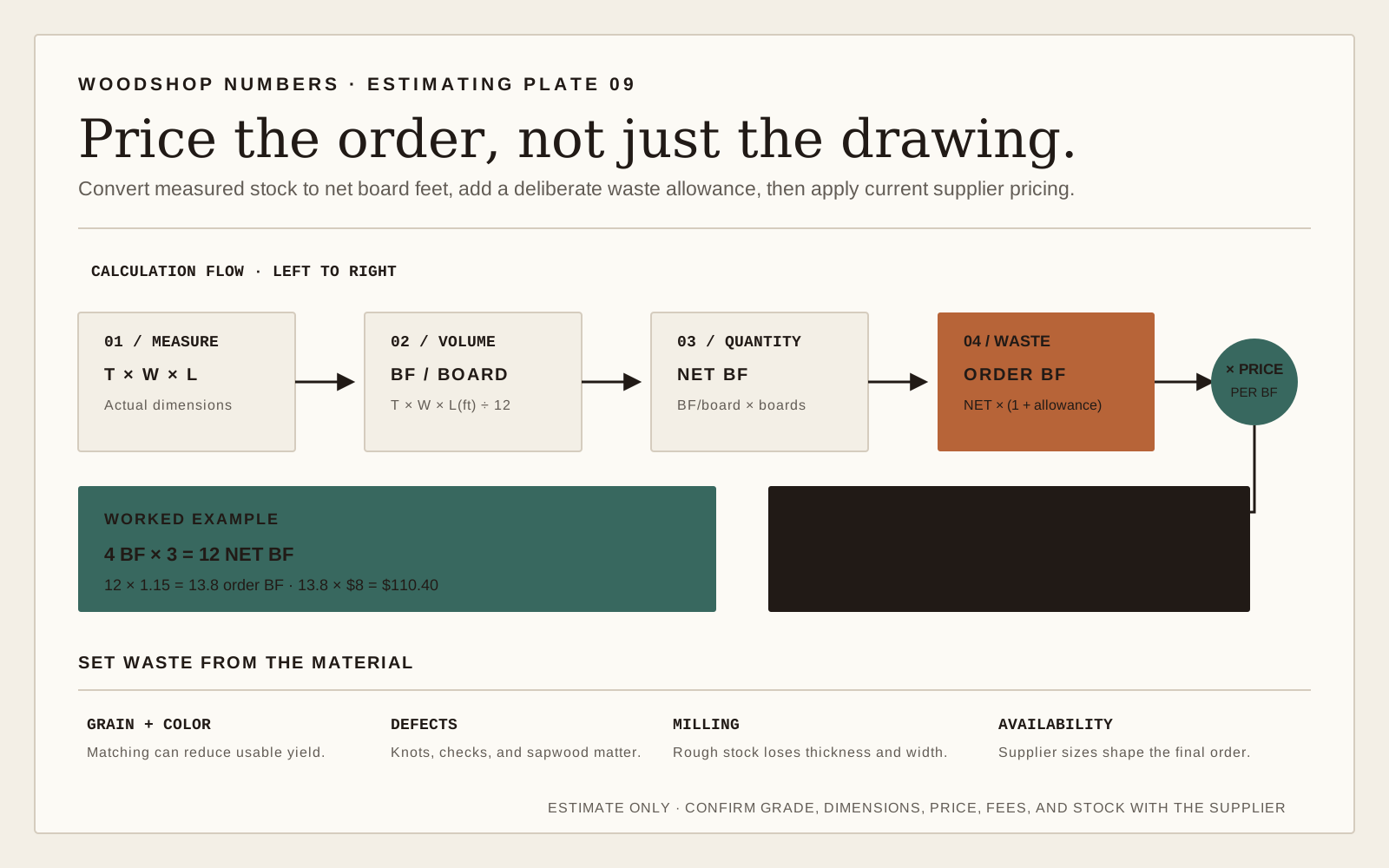
A lumber cost calculator should answer two questions quickly: how many board feet are in the boards you plan to buy, and what that volume turns into when multiplied by the price per board foot. Enter the thickness, width, length, quantity, and the price your lumber yard gives you. The tool also lets you add a small waste allowance so the estimate is closer to a real project order.
This page is for hardwood and project lumber that is priced by board foot. If your store prices construction lumber by the piece, the math is different: you compare pieces directly. If your yard quotes rough hardwood by volume, board feet are the useful starting point.
What the lumber cost formula does
The board-foot part of the calculation is the same measurement used in the main board foot guide: thickness in inches times width in inches times length in feet, divided by twelve. That gives board feet for one board. Multiply by the number of boards, then multiply by the price per board foot.
The cost estimate is not a quote. It is a planning number. Real invoices can change because boards are not abstract rectangles. They may be longer than your cut list, wider than your minimum need, surfaced from thicker stock, or rounded according to the yard's measuring practice.
How to measure boards before pricing
Start with actual buying dimensions, not finished part dimensions. If you need a finished one-inch tabletop after flattening, you may buy thicker material so there is room to joint, plane, sand, and correct cup or twist. If the board has live edges, knots, splits, or sapwood you do not want in the final piece, measure the usable area honestly and add extra stock.
Length is usually the easiest number to overlook. A project part that finishes at forty inches may still require a longer rough board so you can square both ends. Width is similar: a panel glue-up with several narrow boards may be cheaper and more stable than chasing one very wide board.
Why the yard total may differ
A calculator treats every board as a clean rectangular prism. A lumber rack does not. Some yards measure rough stock before surfacing. Some sell boards with nominal thickness language. Some round board footage per board. Some have minimum lengths or sell the entire board rather than cutting exactly what your drawing says.
That is why the best use of this tool is comparison. Estimate one species against another, compare a thicker blank against a thinner blank, and check whether buying an extra board now is cheaper than making a second trip later.
A simple buying workflow
Write your finished cut list first. Group parts by thickness, then add milling margin. Use the calculator for each board size you expect to buy. If you are still choosing boards at the rack, keep the calculator open and update width and length as you find better pieces.
For panel projects, estimate the board feet needed for the finished panel, then add extra stock for matching color and grain. For furniture parts, keep long straight boards for rails and aprons, and use shorter offcuts for drawer parts, cleats, and test cuts.
Common mistakes to avoid
Do not compare two species only by price per board foot. A cheaper species that moves more, mills poorly, or wastes more can be less efficient for the project. Do not forget milling loss. Do not assume all boards in the stack are equally usable. And do not use linear feet when the seller is quoting board feet; a long narrow board and a long wide board can have very different volume.
If you are unsure which measurement applies, read the board foot versus linear foot guide before you buy.
| Input | What it controls | What to double-check |
|---|---|---|
| Thickness | Board-foot volume | Use the buying thickness, not only the final sanded size |
| Width | Board-foot volume and yield | Live edges, defects, and sapwood can reduce usable width |
| Length | Board-foot volume and part layout | Add room for squaring, checks, and trimming |
| Quantity | Total stock volume | Count boards or repeated blanks, not finished assemblies |
| Price per board foot | Material cost estimate | Use the yard quote for the exact species and grade |
| Waste allowance | Buying buffer | Increase it for rough stock, color matching, or complex layouts |