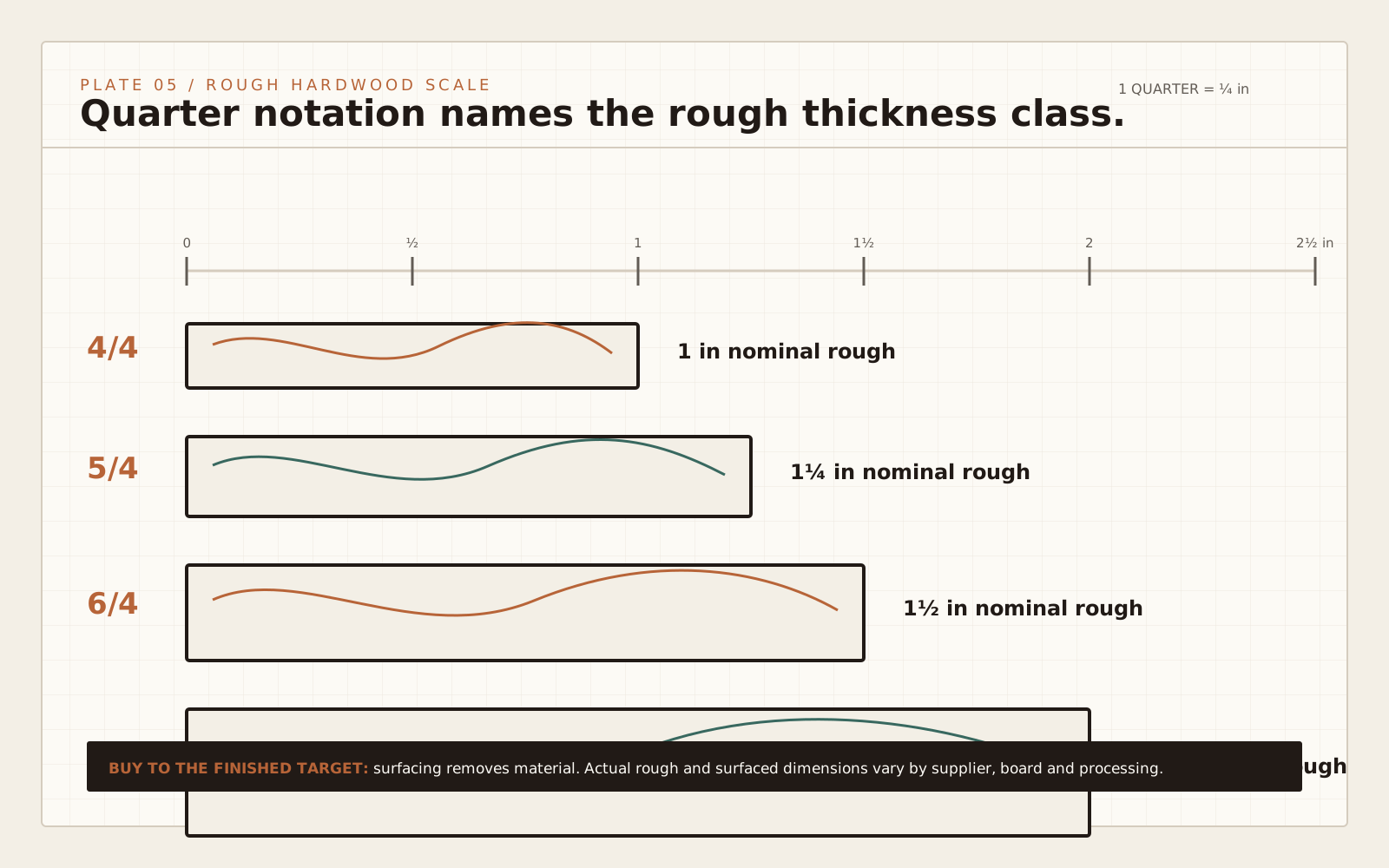
Quick hardwood thickness chart
In hardwood lumber, 4/4 is read "four-quarter" and describes a rough thickness of four quarters of an inch, or one inch. The same rule continues up the rack: 5/4 is five quarters, 6/4 is six quarters, and 8/4 is eight quarters. It is a buying language for rough stock, not a promise that a surfaced board will finish at that exact dimension.
Use the chart below to translate the label before you calculate material. The rough dimension is the useful starting point. The final dimension depends on how much material must be removed to flatten both faces, clean up saw marks, and make the faces parallel. A straight board may finish thicker than a cupped or twisted board from the same pile.
The American Hardwood Export Council lists standard rough thicknesses from 3/4 through 16/4 and explains that surfaced lumber loses material during planing. That distinction is the key to buying correctly: select a rough thickness with enough margin for the actual board and your milling process.
Why finished thickness is not guaranteed
A quarter label describes the board before final surfacing. Drying can reduce dimensions, and milling removes more wood. A lumberyard may sell the stock rough, hit-and-miss planed, surfaced on two sides, or fully surfaced. Those conditions can all carry the same original quarter designation while arriving in your shop at different measured thicknesses.
Do not treat a typical surfaced value as a design constant. A mill may target a common thickness, but the usable result also depends on the lowest spot in the board. Flattening continues until the cutter reaches that low spot. A shallow cup might cost little thickness; a diagonal twist can consume much more.
Your tools matter too. A jointer and planer workflow normally establishes one flat face and then makes the opposite face parallel. Hand planes can preserve thickness by removing material selectively, but they still cannot create a flat part without cutting down high areas. A wide-belt or drum-sanding service may use a different allowance. Measure the stock you can actually buy before locking a plan to an exact dimension.
How to choose quarter thickness for a project
Start with the finished part, then work backward. Write down the minimum acceptable final thickness, not merely the attractive nominal value in a plan. Add room for flattening and for any later sanding or fitting. Then inspect whether the boards available are flat enough to deliver that result.
For a thin panel or box side, 4/4 stock may provide ample room. For a top intended to look visually substantial, 5/4 or 6/4 may be the more direct starting point. Legs, thick rails, turning blanks, and sculpted parts often push the choice to 8/4 or beyond. Laminating thinner stock is another legitimate path when thick stock is unavailable, but the glue lines and grain layout become design decisions.
When a project uses several finished thicknesses, avoid automatically buying every part from the thickest stock. Thick boards generate more waste when planed down for small parts. Group the cut list by required thickness, then compare availability and board-foot cost. The existing board-foot calculator handles the volume math once the correct rough thickness is known.
How to measure and order at the lumberyard
Ask two separate questions: what quarter thickness was the lumber sawn to, and what is its present measured thickness? Also ask what surfacing has already been done. "4/4 S2S" tells you more than "one-inch walnut," but a tape or caliper tells you what is actually on the rack.
Inspect several points along each board. Measure near both ends and in the middle, avoiding a bark edge or obvious defect. Look across the width for cup and sight along the length for bow and twist. A board that measures thick at one edge may still finish thin after flattening.
If the yard sells random-width hardwood by the board foot, tally with the yard's stated method. Rough and surfaced tallies can be handled differently, so confirm whether pricing is based on nominal rough thickness or current dimensions. Use the lumber cost calculator only after entering the same basis the seller uses.
Mistakes that leave a part too thin
The first mistake is designing directly from the quarter label. A 4/4 board is not a finished one-inch board. The second is checking thickness without checking flatness. The third is cutting parts to final length before rough stock has been flattened; shorter pieces can sometimes be milled with less loss, but a bad cut sequence can also remove your options for grain matching.
Another common error is jointing alternate faces. Establish one reference face, mark it, and keep it against the planer bed after the first face is flat. If both faces are randomly jointed, the board can become thinner without becoming parallel. Finally, do not sand aggressively to correct a milling problem. Sanding refines a flat surface; it is a slow and imprecise way to remove a cup or twist.
A reliable shop workflow
Build a rough cut list with finished thicknesses. Choose the quarter category that provides a realistic milling margin. At the yard, measure the actual stock and reject boards whose defects consume that margin. Back in the shop, let material reach a stable condition for the workspace, rough-cut oversized parts, flatten one face, square one edge, plane to thickness, and rip to width.
After milling, let critical parts rest before the final light pass. If stress was released and a part moved, the remaining margin gives you a correction path. Only then update joinery settings and final dimensions. This sequence turns quarter notation from a confusing lumberyard code into a useful planning tool.
| Lumber label | Read as | Rough thickness | Planning note |
|---|---|---|---|
| 4/4 | four-quarter | 1 in. | Common starting stock for furniture parts |
| 5/4 | five-quarter | 1 1/4 in. | Useful when 4/4 may finish too thin |
| 6/4 | six-quarter | 1 1/2 in. | Adds room for heavier tops and rails |
| 8/4 | eight-quarter | 2 in. | Common for legs, thick parts, and turning |
| 10/4 | ten-quarter | 2 1/2 in. | Specialty thick stock; verify availability |
| 12/4 | twelve-quarter | 3 in. | Heavy blanks and sculpted components |
| 16/4 | sixteen-quarter | 4 in. | Large specialty stock; often limited |