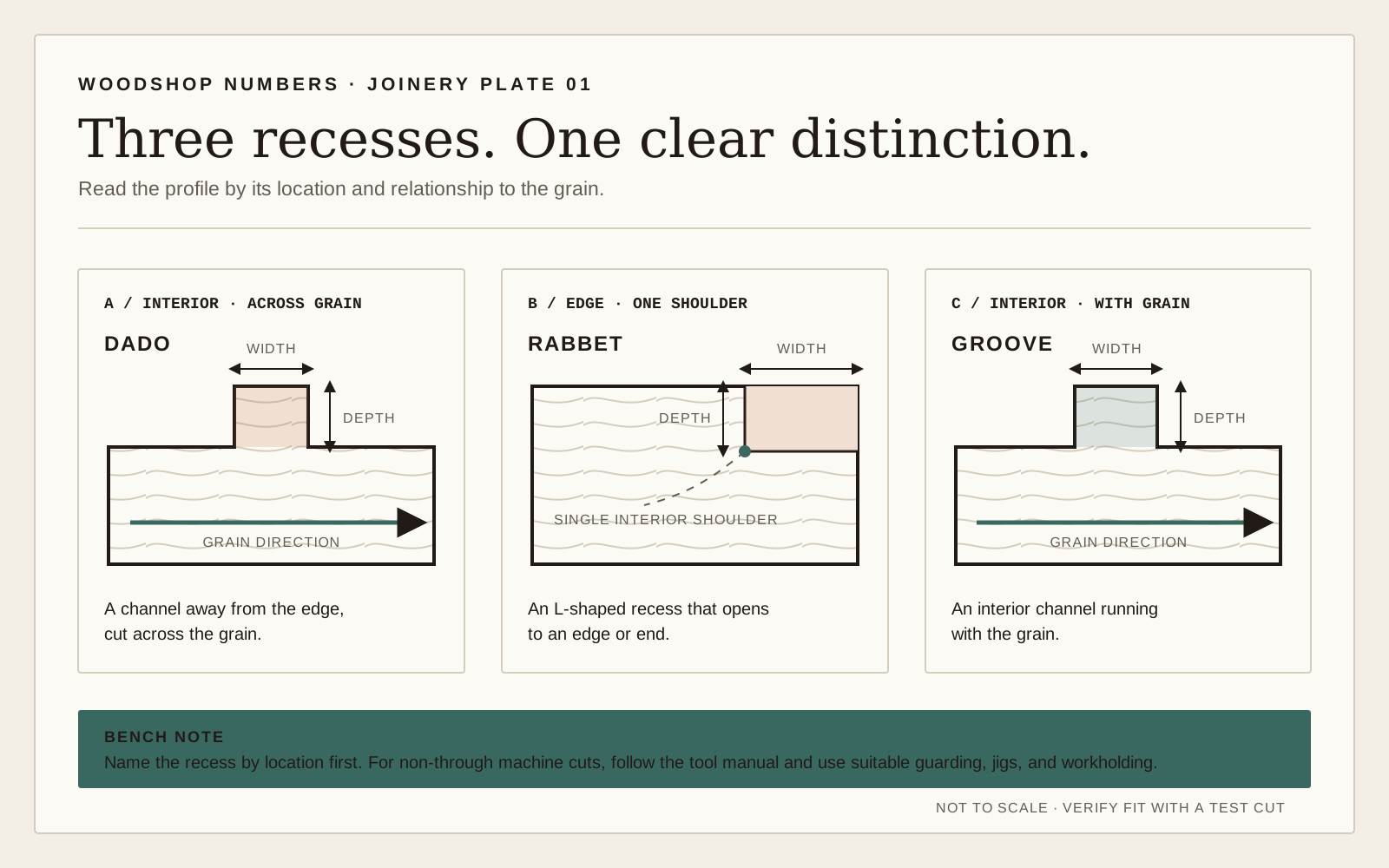
The three definitions
A dado is a flat-bottomed channel cut across the grain in the face of a board. A groove is the same basic channel cut with the grain. A rabbet is an L-shaped recess at an edge or end, open on one side. In sheet goods without visible grain, dado and groove are sometimes used loosely, but the location and function still make the joint clear.
Use a dado to house a shelf or divider across a solid-wood side. Use a groove to capture a drawer bottom, door panel, or cabinet back along the length of a part. Use a rabbet to receive a cabinet back at the rear edge, overlap a case corner, seat glass, or reduce the edge of a mating part.
The names describe cut geometry and orientation, not a guarantee of strength. Joint depth, fit, glue surface, grain, fasteners, load direction, and remaining material determine performance.
Choose the joint by location and grain
Start with where the recess touches the workpiece. If it is fully inside the face, it is a dado or groove. If it opens to the edge and forms a step, it is a rabbet. Then check grain direction: across the grain is a dado; with the grain is a groove.
This distinction helps communicate a plan. "Cut a groove for the drawer bottom" tells the builder the slot follows the side. "Cut a dado for the fixed shelf" tells the builder the slot crosses the cabinet side's grain. "Rabbet the back edge" describes a recess that remains open at the edge for assembly.
In plywood and MDF, use the term that best describes the part orientation and established plan. The more important shop information is the joint's location, width, depth, whether it stops, and which face is the reference.
Size the joint from the mating part
Do not size a dado from the nominal plywood label. Measure the actual shelf or use an offcut as a physical gauge. The fit should slide together with hand pressure and leave room for a sensible glue line; it should not require hammering or rattle visibly.
Set depth according to the part and design, leaving enough material beneath the recess. Woodcraft's guide gives conservative limits for common joints, but a single ratio is not universal across species, panels, grain, loads, and fasteners. Follow a proven project plan for demanding work and make samples in the actual stock.
For solid wood, remember movement. A cross-grain shelf glued tightly through a deep dado can restrain a wide side. Use the joint and glue placement appropriate to the panel dimensions and environment. Plywood casework does not move like a wide solid board, but its thin face veneer and core still limit aggressive cuts.
Router and table-saw setup
A handheld router with a straight bit and clamped guide is flexible for large case sides. Build a T-square or dado jig that references the same edge on every part. A router table is efficient for grooves in smaller pieces, where the work can be safely controlled against the fence.
A table saw with a suitable dado set can cut repeatable through joints, but setup, arbor capacity, inserts, guarding, and local rules matter. Never install a cutter the saw is not designed to accept. A standard blade can make a wider joint through multiple controlled passes when the procedure is safe and repeatable.
For rabbets, a bearing-guided router bit, straight bit with an edge guide, router table, or table-saw setup can work. Curved edges favor a bearing-guided router. Large case parts often favor a handheld router because the tool moves over the work instead of balancing a panel on a small table.
Whichever tool is used, set depth with the machine stopped and isolated from power. Make the first cut in matching scrap. Check width, depth, square shoulders, and tearout before touching a finished part.
Through, stopped, and concealed versions
A through dado or groove reaches an edge and is easy to machine, but the slot may show at the front of a cabinet. A stopped joint ends before the visible edge. It hides the cut but requires a plunge-capable method or cleanup at the stopped end, plus a matching notch on the inserted part when necessary.
A rabbet can run through the end or stop for appearance. A double rabbet can join a box corner, while a rabbet-and-dado combination can locate parts more positively. More geometry is not automatically better; use the simplest joint that gives alignment, glue area, and appearance the project needs.
For plywood, hide a through dado with a face frame, applied edge, or shoulder on the mating shelf. Plan that concealment before cutting so the shelf length and edge treatment remain correct.
Test, diagnose, and assemble
Mill all mating stock to final thickness before setting the joint. Label reference faces and edges. Cut a sample joint, then apply the planned finish sequence to another sample if coatings may tighten the fit.
A loose joint usually comes from a cutter wider than the material or an extra setup pass. A tight joint may reflect nominal-versus-actual mismatch, fence movement, or finish buildup. An uneven bottom points to router tipping, debris under a guide, or inconsistent table registration. Tearout at the exit calls for sacrificial backup or a light preliminary pass.
During assembly, dry-fit the entire case, verify square, and prepare clamps before applying glue. Use only enough adhesive for the surfaces intended to bond and remove squeeze-out from visible corners. The joint should locate the parts; clamps should close the glue line, not force an inaccurate cut into submission.
| Joint | Shape and location | Grain direction | Common uses |
|---|---|---|---|
| Dado | Three-sided channel inside a face | Across the grain | Fixed shelves, dividers, cabinet bottoms |
| Groove | Three-sided channel inside a face | With the grain | Drawer bottoms, door panels, cabinet backs |
| Rabbet | Two-sided L-shaped recess at an edge | Across or with grain | Backs, case corners, glass, overlapping edges |
Primary references
Use the current product label, technical data sheet, safety data sheet and machine manual for the exact item in your shop. These primary references frame the general guidance on this page.
Frequently asked
What is the difference between a dado and a groove?
Both are three-sided channels in a face. A dado runs across the grain, while a groove runs with the grain.
What is the difference between a rabbet and a dado?
A rabbet is open at an edge and has an L-shaped section. A dado is enclosed by two shoulders inside the face of the board.
How deep should a dado be?
Use the project design and test in the actual material. Leave enough panel beneath the joint and avoid treating one depth ratio as universal.
Why is a 3/4-inch dado loose on plywood?
The panel may measure less than its nominal label. Size the joint with a caliper or offcut and use an undersized plywood bit or two-pass setup as needed.
Should a shelf dado be stopped?
Stop it when the front edge would otherwise expose the slot. A through dado is faster and can also be concealed with a face frame or applied edge.