The fastest decision
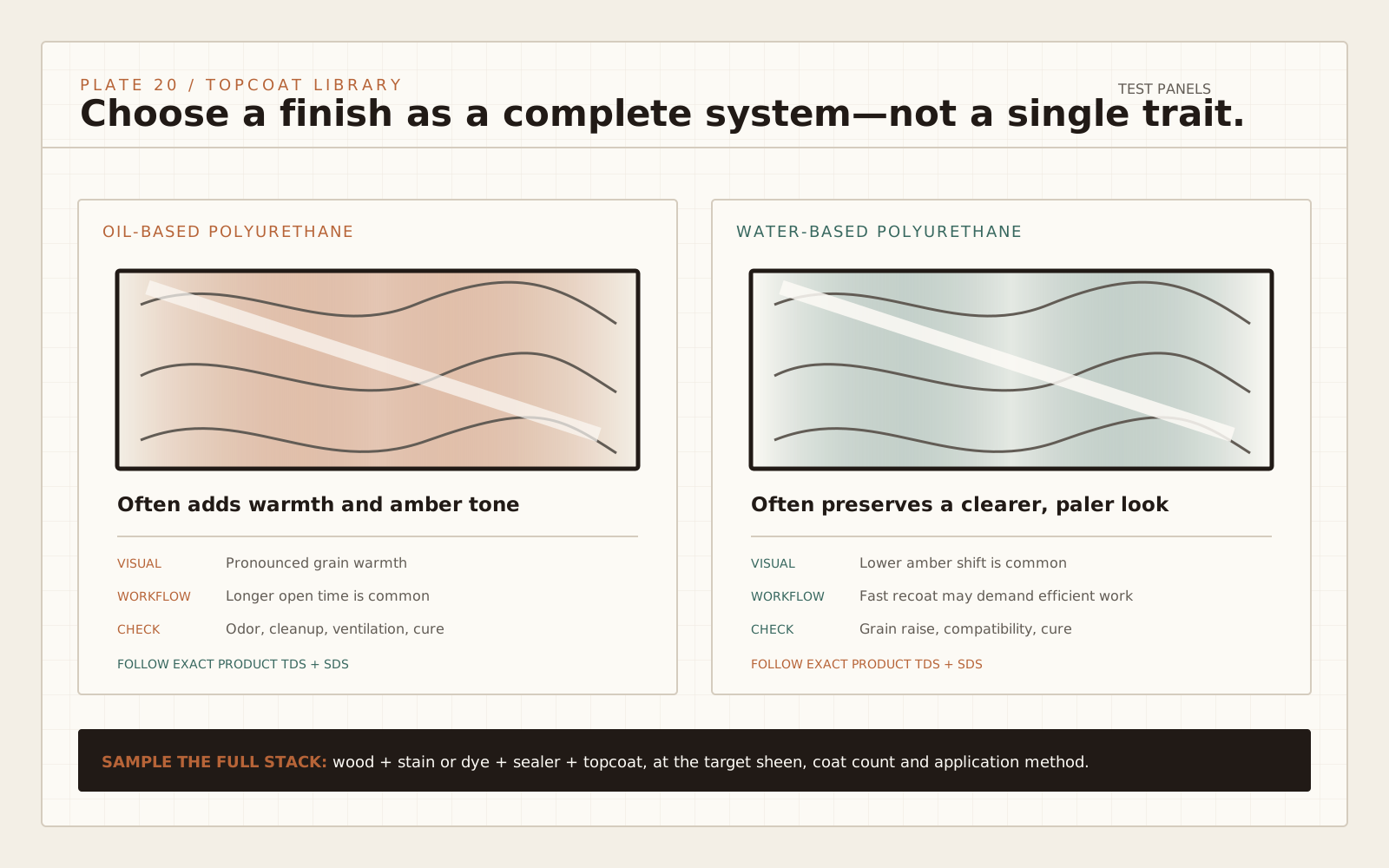
Choose water-based polyurethane when preserving a pale wood or paint color, reducing solvent odor, and completing recoats sooner are priorities. Choose oil-based polyurethane when an ambering effect is desired, a longer wet edge suits the application, and mineral-spirit cleanup and stronger odor can be managed safely.
Do not assume every oil formula is tougher than every water formula. Popular Woodworking notes that the historical durability gap has narrowed and describes modern differences as comparatively small. Compare the exact products, intended surface, film build, application directions, and cure requirements.
Color is often the deciding factor
Oil-based polyurethane adds warmth and an amber cast. That can enrich walnut, cherry, or stained wood, but it can make maple, birch, ash, white paint, or a pale Scandinavian-style surface look yellower than intended. The color can deepen as the finish ages.
Water-based polyurethane usually dries clearer and preserves more of the raw or stained color. On dark wood it can appear cooler or less saturated. A compatible sealer or stain can add warmth before the clear coat, but every added layer creates a compatibility question.
Make color decisions on the same wood, sanding sequence, stain, and lighting as the project. Wiping bare wood with a solvent may preview some darkening but does not reproduce a complete cured film. Only a finished sample shows clarity, chatoyance, sheen, and grain contrast together.
Drying, odor, and cleanup change the workflow
Water-based products generally dry and recoat faster. That shortens the window for dust to settle but also gives less time to tip off an edge or repair a lap mark. Oil-based products usually remain open longer, which can help a broad surface level but extends dust exposure and project time.
Use the product's current recoat and cure schedule. "Dry to touch" is not ready for sanding, recoating, hardware, or use. Temperature, humidity, coat thickness, airflow, and the sealed nature of the substrate all change timing.
Water-based cleanup commonly uses soap and water while the finish is wet. Oil-based cleanup normally requires the solvent stated on the label. Solvent-soaked rags can create a fire hazard; spread or store and dispose of them exactly as the product and local safety guidance require. Never wad oily rags into a trash can.
Both finish types need ventilation and appropriate personal protection. "Water-based" does not mean harmless or suitable for spraying without specialized controls. Read the safety data and application instructions for brushing, wiping, or spraying.
Durability needs a product-level comparison
Popular Woodworking describes oil-based polyurethane as only marginally ahead in resistance in its comparison, while water-based systems offer practical advantages in color, odor, and drying. Product quality, film thickness, preparation, and cure can matter more than the carrier category.
Match the finish to use. A display shelf, desk, dining table, cabinet door, and floor receive different abrasion, heat, moisture, and chemical exposure. Verify that the exact finish is approved for the intended surface. Ordinary interior polyurethane is not automatically an exterior coating or a suitable worktop for every use.
Sheen affects visible wear. Gloss can show scratches and surface defects clearly, while satin contains flattening agents that must be stirred consistently. Do not judge protection only by sheen; compare the same product family and specified coat system.
Application and compatibility checks
Prepare the wood uniformly and remove dust without contaminating the pores. Use the brush, pad, roller, or spray equipment recommended for the finish. Synthetic bristles are commonly paired with water-based coatings, while natural bristles are commonly used with oil-based products, but the label controls.
Apply thin, even coats. Heavy coats trap defects, extend drying, and encourage runs. Maintain a wet edge and finish long surfaces in a planned direction. Do not keep brushing a water-based film after it begins to set.
Between coats, follow the manufacturer's sanding requirement and recoat window. Sanding can create mechanical adhesion and remove dust nibs, but aggressive abrasion can cut through edges and stain. Use the grit specified for the product and vacuum carefully.
When coating over stain, shellac, another polyurethane, paint, or an older finish, verify compatibility and required cure. "Oil over water" or "water over oil" is not a complete rule. The underlying layer must be suitable, clean, cured, and prepared as the topcoat maker requires.
Build a sample board before finishing
Divide an offcut into oil-based and water-based sections. Use the full project sanding sequence, stain, sealer, coat count, and between-coat process. Label dates and conditions. View the samples in daylight and the room's artificial light.
Test application on horizontal and vertical surfaces if the project has both. Check for brush marks, raised grain, edge buildup, and color. After the listed cure, compare scratch visibility and feel with realistic, non-destructive handling.
Include a repair test. Scuff one cured section according to the manufacturer, add another coat, and inspect the blend. Furniture eventually collects wear; knowing whether a local touch-up remains visible can influence both chemistry and sheen.
For a large project, calculate not only face area but also edges, underside, test boards, and unavoidable application loss. Buy matching product from the same line and record batch information. Do not stretch the last coat so thin that one section receives a different film.
Keep application tools dedicated and clean. Residual oil, silicone, soap, or dried finish can create craters and particles in the next coat. Filter only when the manufacturer permits it, and never return contaminated finish from a working cup to the original container.
Keep the chosen sample until the project is complete. It becomes a reference for color, sheen, and repair. Record the exact product, batch, applicator, and schedule on the back. That small record is more useful than a generic claim that one chemistry is always best.
| Factor | Oil-based polyurethane | Water-based polyurethane |
|---|---|---|
| Color | Adds amber warmth | Usually stays clearer |
| Working time | Generally longer | Generally shorter |
| Recoat workflow | Usually slower | Usually faster |
| Odor | Stronger solvent odor | Typically lower, but ventilation still required |
| Cleanup | Label-specified solvent | Usually soap and water while wet |
| Best reason to choose | Warm color and longer wet edge | Clear color and faster workflow |