Common nominal and actual dimensions
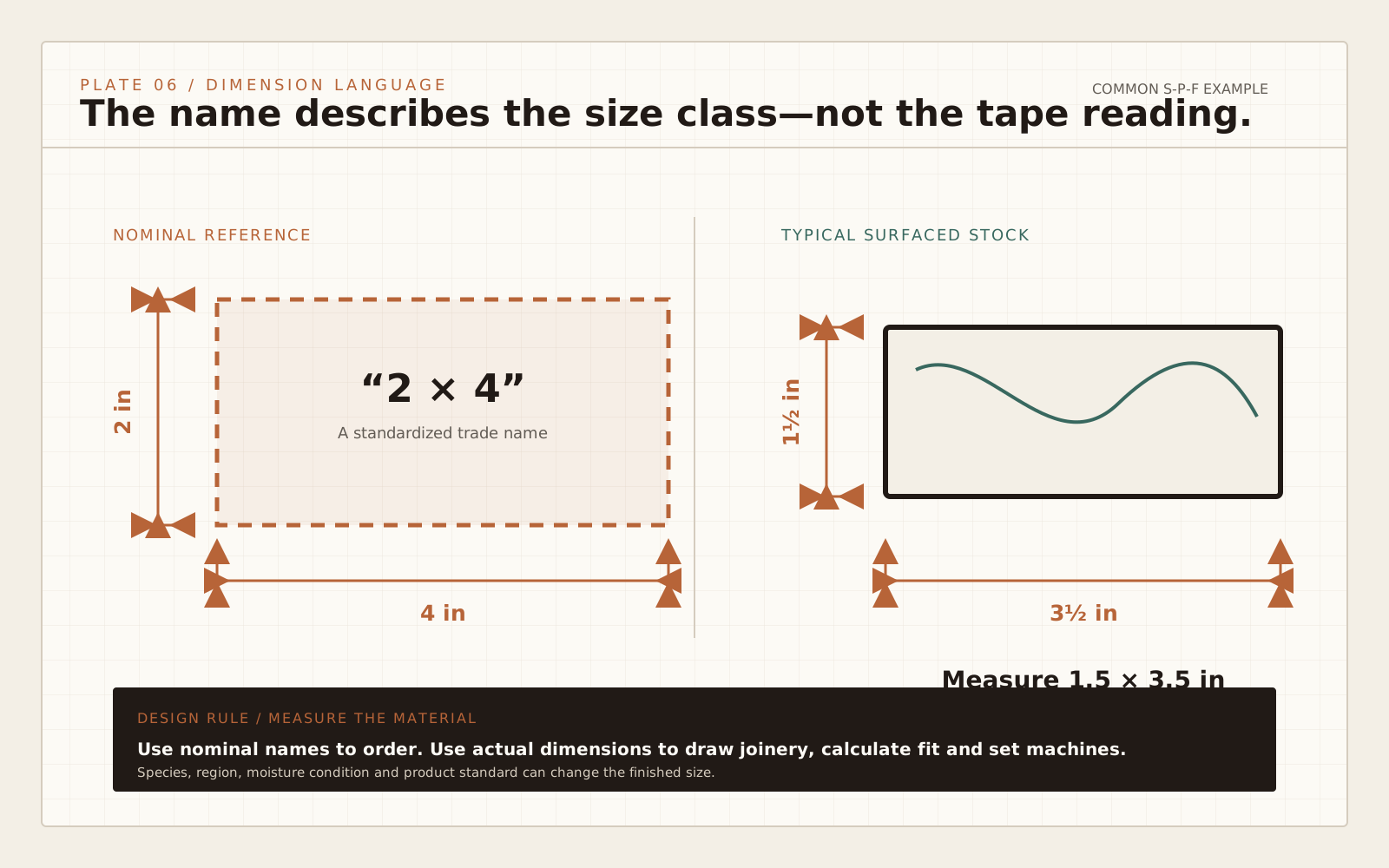
Nominal size is the product name on the rack. Actual size is what the board measures after drying and surfacing. A nominal 2x4 in standard US dimensional lumber is commonly 1 1/2 inches by 3 1/2 inches; a nominal 1x6 is commonly 3/4 inch by 5 1/2 inches. Build, fit, and cut joinery from the actual measurement.
The chart below covers common surfaced dimensional lumber. It is a reference, not permission to skip measuring. Boards can vary slightly, specialty profiles follow other rules, and reclaimed or rough-sawn stock may not match the standard dressed sizes.
Keep nominal names in the shopping list because that is how stores organize material. Convert them to actual dimensions in the cut list because that is how parts occupy space. This simple separation prevents many layout errors.
Why lumber names and measurements differ
Nominal names trace back to the rough size earlier in manufacturing. The board is sawn oversized, dried, and planed to a consistent finished profile. Drying reduces dimensions and planing creates smoother, straighter faces, so the board that reaches the rack is smaller than the name suggests.
The name remains useful because it identifies a standardized product family. A builder asking for a 2x6 is requesting a familiar category, not making a literal measurement claim. Kreg and ProWood both distinguish the traditional nominal label from the dressed actual dimension and advise using actual size where fit matters.
This convention is different from a defective or undersized board. Standard dimensional lumber is intentionally manufactured to a recognized dressed size. The problem occurs only when a plan, jig setting, or hardware choice treats the label as the measurement.
When actual size changes a project
Actual dimensions affect openings, shelves, drawer boxes, face frames, benchtops, and every joint that surrounds another part. A frame made from 1x material is usually 3/4 inch thick, so a plan that subtracts a full inch at each side will create an oversized opening. A pocket-hole jig set from the nominal label can place the screw incorrectly. A dado cut to a printed plywood fraction may be loose if the panel is thinner than the label.
Board-foot calculations introduce another distinction. Dimensional softwood may be purchased by piece or linear foot, while hardwood is often sold by board foot and quarter thickness. Do not use the dressed width of a 2x4 as though it were rough 8/4 hardwood without understanding how the seller tallies it. Match the calculator inputs to the material and sales method.
Actual size also controls hardware. Screw length, edge distance, hinge cup clearance, and bracket fit depend on the wood that is present, not the shelf tag. Measure before drilling, especially when two batches or suppliers are involved.
How to measure lumber for plans and joinery
Use a tape for rough layout and a reliable rule or caliper for joinery. Check thickness and width at several points. Construction lumber can have eased edges, so a caliper near the rounded corner may not represent the full flat face. Measure on a clean section away from damage, then use the smallest relevant dimension when a part must fit inside an opening.
Write actual stock dimensions at the top of the plan. If the plan lists only nominal material, convert each line before cutting. If it supplies both values, confirm that your stock matches the designer's assumption. For assemblies, make a story stick or test piece from the same batch rather than repeatedly transferring fractions.
Mill first, measure second, and cut joinery third. If you plane or sand after laying out a joint, its shoulders and depths may no longer align. For plywood, cut a short offcut and use the offcut itself to set a dado, router jig, or spacing block.
When a plan combines store-bought boards with shop-milled hardwood, create two material columns. Record each item's nominal shopping name beside its measured working size. That small distinction keeps a later substitution from silently changing an opening, reveal, or joint.
Dimensional lumber is not hardwood quarter stock
The 1x and 2x system describes common dimensional softwood products. Hardwood dealers often use 4/4, 5/4, 6/4, and similar quarter notation for rough thickness, with random widths and lengths. Plywood and other panels use nominal thickness or performance categories and may measure slightly different from the printed fraction.
These systems overlap in ordinary conversation, which creates confusion. "One-inch board" could mean a nominal 1x board that measures 3/4 inch, rough 4/4 hardwood near one inch before surfacing, or a panel sold under a one-inch category. Ask for the material type, surfacing state, and actual measurement.
Pressure-treated lumber, decking profiles, timbers, and specialty products can follow their own tables. Use the grade stamp or manufacturer's published dimensions for those products instead of extending a general chart beyond its scope.
A buying and layout checklist
At the store, identify whether the plan calls for dimensional lumber, hardwood, or sheet goods. Read the shelf label, then measure one board from the actual stack. Reject severe warp and damage. Confirm that the available width and thickness leave enough material for any planned milling.
In the shop, record the measured dimensions, revise the cut list if needed, and make one test assembly before batch cutting. Keep nominal labels only where they help with purchasing. Everywhere fit, strength, and joinery are involved, work from the real board in front of you.
| Nominal size | Common actual thickness | Common actual width | Typical shop use |
|---|---|---|---|
| 1x2 | 3/4 in. | 1 1/2 in. | Cleats, trim, small frames |
| 1x3 | 3/4 in. | 2 1/2 in. | Frames and light rails |
| 1x4 | 3/4 in. | 3 1/2 in. | Shelves, aprons, face frames |
| 1x6 | 3/4 in. | 5 1/2 in. | Shelving and wider panels |
| 2x2 | 1 1/2 in. | 1 1/2 in. | Small legs and supports |
| 2x4 | 1 1/2 in. | 3 1/2 in. | Benches, frames, shop fixtures |
| 2x6 | 1 1/2 in. | 5 1/2 in. | Wide rails and heavy shop parts |
| 4x4 | 3 1/2 in. | 3 1/2 in. | Posts and heavy legs |